Get Full Government Meeting Transcripts, Videos, & Alerts Forever!
Get email alerts on the Enrollment And Staffing topic
No spam. Unsubscribe anytime.
District 518 projects about 3,850 students; leaders flag special-education staffing needs
Summary
Administrators reported expected K–12 enrollment of roughly 3,850 students, class-size averages between about 21 and 25, and three open special-education licensed positions; board asked for quarterly reports showing licensed teacher-to-student and adult-to-student ratios.
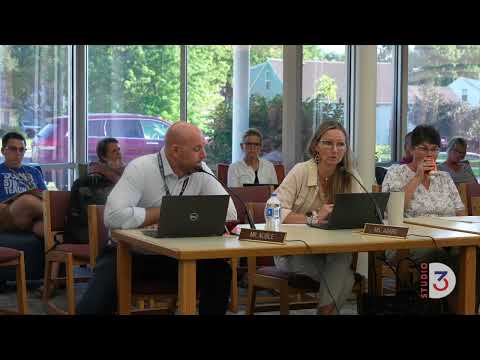
Josh Noble, administrator, said the district expects about 3,850 students in the K–12 system this fall and about 590 students enrolled in the VIBE program, with roughly 90 VIBE students still completing enrollment.
The update came at the District 518 regular board meeting, where Noble described class-size averages “between 21 and 25 students,” with some high-school courses larger (the high school average listed at 25.3). Noble said the learning center serves about eight to 10 students.
Noble also told the board 21 new staff joined the district this summer, including seven alumni. He described professional development focused on literacy, engagement and collaboration and praised facility, technology and custodial crews for preparing buildings for the school year.
The board pressed for more granular reporting on class sizes. Laurie, board member, noted the district’s original intermediate design targeted 20 students per class; Noble provided current averages for Prairie Elementary (kindergarten 21.3; first grade 22.5; second grade 23.3; third grade 22.1; fourth grade 24; fifth grade 23.4). He said the middle grades average 23.4 and the high school 25.3.
Noble reported three open special-education licensed positions; he said administrators and the interim special-education director are reallocating caseloads and reassigning some staff to cover needs. He added that paraeducator (Class 2) support provides smaller adult-to-student ratios in special-education settings—Prairie about 1:4, intermediate about 1:5, middle school about 1:4, and high school learning center about 1:8—which helps offset some of the licensed-teacher shortfalls.
Board members asked for the district to add gen-ed para counts to the published ratio sheet and agreed to receive a quarterly report showing both licensed teacher-to-student and adult-to-student ratios so the board can monitor staffing trends during the year.
Clarifying details disclosed at the meeting included the district’s reliance on a preliminary budget for current-year percentage comparisons and that some class-size changes resulted from late staffing declines (one teacher turned down a position the week before induction week).