Get Full Government Meeting Transcripts, Videos, & Alerts Forever!
Get email alerts on the Transit topic
No spam. Unsubscribe anytime.
DCTA reports ridership gains, GoZone changes and plans for A Train speed, frequency and extension
Summary
DCTA CEO Paul Christina told Denton city council Aug. 19 the agency has seen ridership improvements after reallocating GoZone capacity and is advancing a three-phase A Train enhancement program that includes curve/speed upgrades, a Downtown Carrollton extension study and infrastructure to enable 15-minute peak headways.
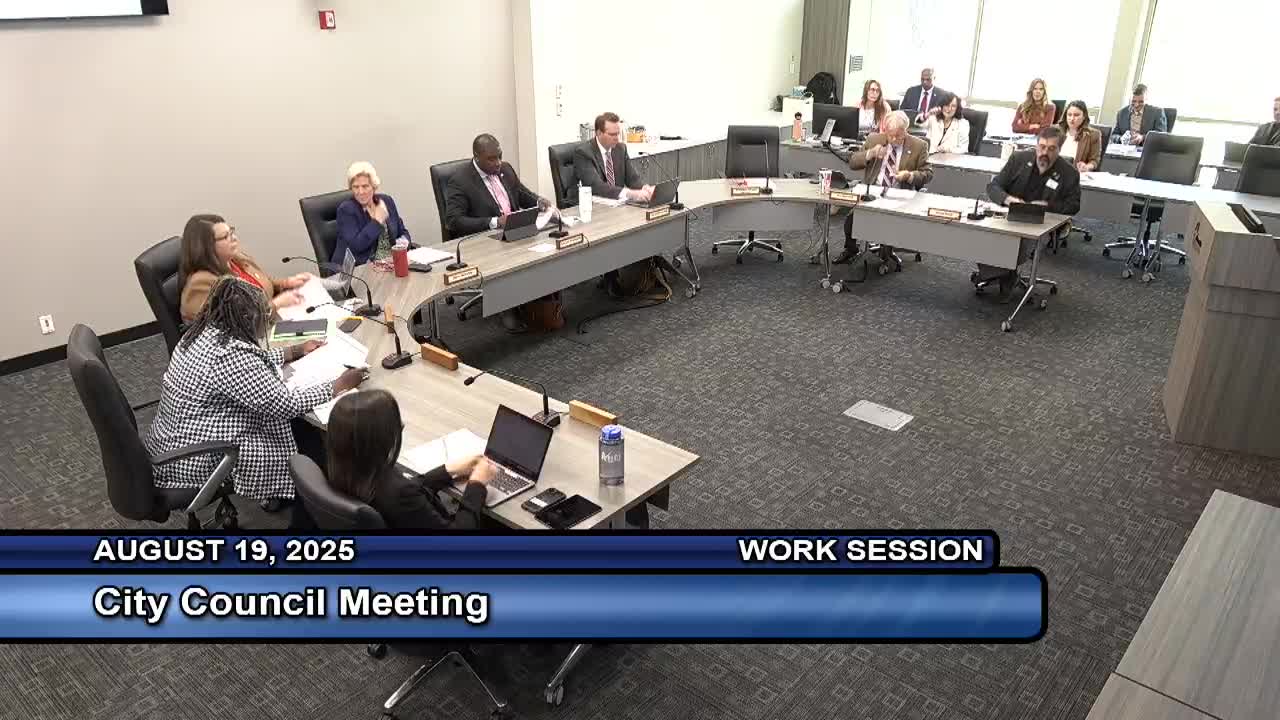
Paul Christina, chief executive officer of the Denton County Transportation Authority (DCTA), briefed Denton city council on Aug. 19 about safety performance, ridership trends and a major plan to upgrade the A Train commuter rail.
Safety and service performance
Christina said DCTA's systems are reporting low incident frequency ratios, with some year-to-date modes performing better than last year; paratransit access service was operating at roughly 99% on time. Fixed-route on-time performance had improved from the early fiscal year ranges and DCTA credited internal operational reforms, hiring and coordination with city road crews for detours and construction.
GoZone and fixed-route optimization
DCTA described a deliberate shift last year to reallocating GoZone microtransit capacity away from some parts of Denton and increasing fixed-route bus frequency on core Connect routes. Christina said the result was a net gain of about 45,000 transit trips inside the city of Denton (a 91,800 increase in connect riders versus a loss of 47,500 GoZone trips), and a 60% year-over-year increase on several bus routes. Christina framed the swap as a data-driven, business-decision-based optimization that increased overall ridership and cost-effectiveness.
A Train Enhancement Program
Christina described a three-phase A Train enhancement: (1) curve and speed improvements to raise allowable speeds on segments where current limits are lower (he cited superelevation and limited changes to curvature that can shave minutes off travel time), (2) design for a two-mile extension to Downtown Carrollton to improve regional connectivity (enabling two-seat service from Downtown Denton to north DFW Airport), and (3) infrastructure upgrades necessary to run 15-minute peak frequencies. The agency is working on design and expects to advance elements as contracts and board approvals align.
Safety upgrades and customer experience
Christina said DCTA is installing cameras and a security operations center, platform video screens with arrival information and public safety messaging, and a public-address system at platforms. The agency also audited GoZone virtual stops (about 14,000), relocated or adjusted roughly 1,000 frequently used high-risk stops and assigned vehicles alphanumeric markers to trace complaints and drivers.
Council questions and follow-up
Council members asked about a potential Corinth station, the ongoing presence of a Denton County Sheriff's Office officer under contract, and conversations with the University of North Texas about aligning campus and city transit services. Christina said DCTA is in talks with UNT and member cities and is exploring the operational and contractual issues needed for closer integration.
Why this matters: DCTA's presentation showed rising ridership where fixed-route frequency increased and outlined a near-term capital program to make rail service faster and more frequent. Local officials pressed for continued coordination around campus and regional connections and for safety measures at stops and on platforms.