Get Full Government Meeting Transcripts, Videos, & Alerts Forever!
Get email alerts on the Budget topic
No spam. Unsubscribe anytime.
El Paso County CFO details budget calendar, reserve policy and TABOR refund
Summary
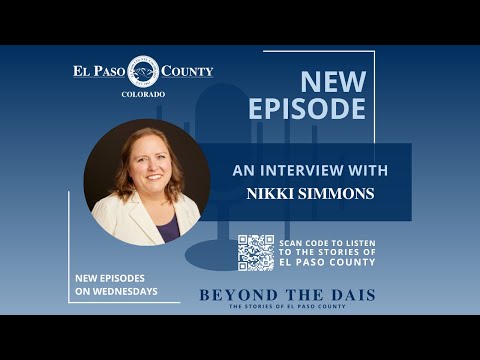
El Paso County Chief Financial Officer Nikki Simmons outlined the county's annual budget process, reserve policy and the effect of the Taxpayer Bill of Rights (TABOR) in a Nov. 3 podcast interview.
El Paso County Chief Financial Officer Nikki Simmons outlined the county's annual budget process, reserve policy and how the Taxpayer Bill of Rights (TABOR) affects local finances in a podcast interview on Nov. 3.
Simmons said the county begins its budget process each March using a base-budget model and asks departments to submit their most critical needs. "Everything that we do in the county's budget is looked at through the lens of the county strategic plan," she said, adding that the administration compiles a preliminary balanced budget over the summer and presents it to the Board of County Commissioners in October as required by statute.
The preliminary balanced budget is administration's proposal; authority to set the budget rests with the Board of County Commissioners. Simmons described an open process of department hearings and a public "final direction hearing" where commissioners give nonbinding direction that staff then incorporate before the December adoption. She noted statutory deadlines: presentation of the preliminary balanced budget by Oct. 15 and final adoption by Dec. 15, and said the county sets its mill levy at the December hearing. "Property taxes, which is about 30% of our overall budget," Simmons said, provide a large share of county revenue.
Simmons explained the mechanics of a balanced budget and the use of fund balance. She said available fund balance (reserves) can be used to make the budget balance but county policy restricts using those reserves for ongoing operating costs such as adding full-time positions. "It wouldn't be proper to use fund balance to cover adding an FTE or adding an employee for the next five years because that's one-time money," she said. Instead, fund balance is used for one-time investments, such as improvements to facilities or roads.
On reserves, Simmons said El Paso County is targeting a 23% reserve to help "weather any sort of economic uncertainty." She contrasted that with the Government Finance Officers Association best-practice minimum of 16.67% (two months of revenue). Simmons said the county's fund balance has grown from underspending and unanticipated one-time revenues.
Simmons summarized TABOR's limits on local revenue growth and tax-rate increases, saying the constitutional measure prevents governments from increasing tax rates without voter approval and constrains revenue growth by CPI plus a construction-based growth factor. When revenues exceed the TABOR cap, governments must either refund the overage to taxpayers or seek voter approval to retain it.
"In the past several years we have refunded that straight to residential real property owners," Simmons said. She said El Paso County plans to refund roughly $4.5 million from 2024 overages, which she estimated would amount to about $19 per household as a one-time credit on property tax statements.
Simmons also warned that state-funded mandates can count against a local government's TABOR cap if the state collects the revenue and then mandates services locally. She said the county monitors legislation and works with its government affairs staff to anticipate changes that could affect the TABOR calculation. Simmons noted that some local governments have asked voters to be "detabered" (to remove TABOR limits) but El Paso County has not done so.
To increase public transparency, Simmons said the county adopted ClearGov software this year to publish an interactive budget book on its website with department-level line items, performance metrics and strategic goals. The ClearGov budget book replaces a more manual Word-based budget book filed with the Colorado Department of Local Affairs and is intended to let residents examine departmental spending, staffing and key performance indicators.
Simmons encouraged public participation: budget hearings are streamed and posted on the county budget website and citizens may submit comments at any budget hearing, including the critical need hearings, the final direction hearing and the December adoption hearing. She also highlighted the county's "Citizens College," an outreach exercise that walks residents through budgeting trade-offs and mill-levy mechanics.
Simmons closed by inviting residents with questions to reach out to her office and reiterated the county's focus on sustainable staffing and conservative budgeting to avoid furloughs or cuts.