Get Full Government Meeting Transcripts, Videos, & Alerts Forever!
Get email alerts on the Behavioral Health Mobile Crisis topic
No spam. Unsubscribe anytime.
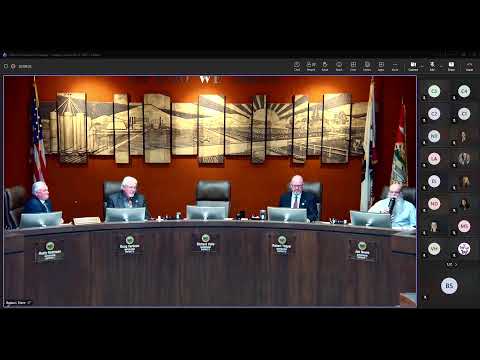
Board approves final closeout for county mobile crisis planning grant; Kingsview mobile crisis team now operating
Summary
Christie Lappke, assistant director of Kings County Behavioral Health, told the Board of Supervisors on Nov. 4 that the department sought approval of a subcontractor release and assignment form from Advocates for Human Potential to confirm submission of the final invoice and completion of deliverables for the mobile crisis planning and implementation grant.
Christie Lappke, assistant director of Kings County Behavioral Health, told the Board of Supervisors on Nov. 4 that the department sought approval of a subcontractor release and assignment form from Advocates for Human Potential to confirm submission of the final invoice and completion of deliverables for the mobile crisis planning and implementation grant.
Lappke said the original agreement (No. 22173) was approved Oct. 4, 2022, under the Behavioral Health Continuum Infrastructure Program (B‑CHIP) and that subsequent amendments increased the county’s allocation until the planning and implementation effort had total funding of $1,900,000. The planning phase ran from February through June 2023 and produced a mobile crisis planning report and action plan the board received on Aug. 15, 2023.
Implementation included a request‑for‑proposals that resulted in Kingsview being awarded the operational contract (agreement No. 204186). Kingsview launched the countywide 24/7 access line (559‑247) and the mobile crisis response team (MCART) on Dec. 31, 2024. The county’s implementation funding paid startup costs and allowable operating costs such as vehicles, call‑center hardware and software, personnel and training, and outreach materials.
Lappke reviewed recent program metrics for the board: "In reviewing the data... the call center receives approximately 900 calls per month," of which about 200 monthly calls were crisis calls and roughly 700 were requests for community behavioral‑health resources. She said about a quarter of crisis calls concern people under 18 and three‑quarters concern adults. Kingsview mobilizes to about 90% of calls; in August 2025 Kingsview responded to 133 of 145 mobile crisis calls, a 92% field response rate. Lappke said the county’s average field response time is just over 20 minutes; state guidance for rural/small counties permits up to 120 minutes but she said Kings County has a goal nearer 60 minutes and Kingsview consistently operates under 25 minutes.
Board members asked about oversight and interagency coordination. Lappke said the county conducts monthly contract performance meetings and convenes a quarterly Kings County Scribe Collaborative that includes Adventist Health, hospital and crisis providers, Kingsview staff, law‑enforcement representatives and other stakeholders to review data and operational issues. She added that Kingsview is required by contract to meet regularly with 911/dispatch and law enforcement and to coordinate with the Naval Air Station and other partners.
On the question of who can initiate an involuntary hold (Welfare & Institutions Code 5150), Lappke said local designations allow law enforcement officers to initiate holds when appropriate and that licensed clinicians on the county crisis team are designated to write and uphold 5150 holds for adults and 5585 equivalents for youth.
Supervisor Rusty Robinson moved to approve the subcontractor release form; Supervisor Robert Thayer seconded. The clerk called the roll: Joe Neves, Doug Verboom, Rusty Robinson and Robert Thayer voted yes. The motion passed 4–0 with one member absent.