Get Full Government Meeting Transcripts, Videos, & Alerts Forever!
Get email alerts on the Energy Storage topic
No spam. Unsubscribe anytime.
Solano supervisors adopt new rules for large battery storage, restricts siting on farm and residential zones
Summary
The Solano County Board of Supervisors on Oct. 28 adopted a permanent ordinance amending county zoning rules to regulate large, grid-serving battery energy storage systems, barring siting on agricultural and residential lands and imposing fire- and safety-related conditions.
The Solano County Board of Supervisors on Oct. 28 adopted a permanent ordinance amending Chapter 28 to regulate large, grid-serving battery energy storage systems (BESS) after two years of study and public outreach.
County planning staff and consultants told the board the ordinance responds to safety concerns raised by recent thermal-runaway incidents elsewhere in the state and to a new state permitting path that can transfer approval authority to the California Energy Commission. “Thermal runaway ... is an uncontrollable increase in temperature and a release of energy in these batteries,” said Eric Heggstrom, associate planner, during the staff presentation, describing the risk the ordinance targets.
The ordinance applies only to front-of-meter systems with a capacity greater than 1,000 kilowatt-hours (about the size of an electric-vehicle battery pack). It prohibits siting BESS in agricultural, residential, resource-conservation and park zoning districts and limits eligible parcels to manufacturing, industrial and specified commercial-service zones. The county also bars systems within very-high fire-hazard severity zones and requires facilities to be elevated above FEMA base flood elevations.
For systems the county determines have a nonzero risk of thermal runaway, the ordinance requires enhanced safety measures: 300-foot setbacks from sensitive receptors, a 30-foot fire-rated access road around the installation, plume and smoke-dispersion studies, third-party technical review paid by applicants, emergency-response equipment and training support, and financial assurance that covers decommissioning and cell removal. Systems documented by a county-selected third party to present no thermal-runaway risk receive reduced setbacks and fewer enhanced conditions as an incentive to adopt lower-risk chemistries.
County staff said the rules include cyber-security requirements, coordination for radio interoperability and consolidated dispatch funding, and a requirement that battery cell manufacturers be responsible for taking back cells for recycling rather than leaving disposal to local landfills.
The ordinance will give the county specific, measurable standards to present to state agencies when an applicant seeks CEC review under the AB-205 opt-in process. Planning staff said the rules were developed with input from a technical working group of county fire officials, environmental health, the agricultural commissioner, Office of Emergency Services, industry representatives and community members. “We held a very robust outreach process over that two-year period,” planning manager Alan Calder told the board.
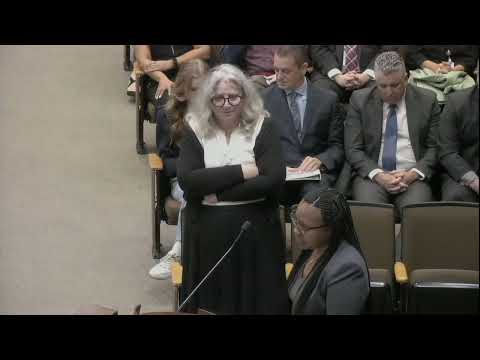
Public commenters included nearby residents and agricultural stakeholders. Michael Geller of Vacaville said the ordinance properly defines where projects belong and urged local control. Miranda Jae Chen, executive director of the Solano County Farm Bureau, thanked the board for excluding prime farmland from eligible sites and cited concerns including property impacts and smoke or contamination from a fire.
The board voted to adopt the ordinance by a recorded vote of 5-0. The ordinance does not list a local ordinance number in the hearing record; planning staff said individual use permits will still require separate public hearings and CEQA review where applicable.
What happens next: each BESS application under the new rules will come to the county as a discretionary use permit with required technical studies; staff will select third-party reviewers and collect technical review funds from applicants. The county also said it will maintain discretion to determine whether a proposed battery chemistry qualifies as low-risk for reduced standards.