Get Full Government Meeting Transcripts, Videos, & Alerts Forever!
Get email alerts on the Municipal Accounting topic
No spam. Unsubscribe anytime.
Senate committee clears bill to bring second-class cities into state accounting system
Summary
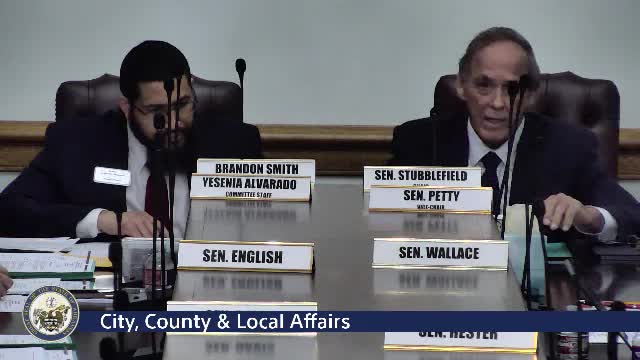
The Senate City, County & Local Affairs Committee voted to pass House Bill 1311, which phases in the state's standard accounting practices for second-class cities over three years to improve auditability and financial transparency.
The Senate City, County & Local Affairs Committee on (date not specified) voted to pass House Bill 1311, a measure that would require second-class cities to adopt the state's standard accounting practices over a three-year implementation period. Representative Robin Lundstrom presented the bill, saying it will help municipalities move from paper-based ledgers and other outdated practices to systems that make audits easier and provide clearer budget information to elected officials and residents.
Supporters told the committee the state's accounting standards have been used for decades by state agencies, counties and many first-class cities and that second-class cities lag behind, creating audit difficulties. Representative Lundstrom said the change would give mayors and city councils better fiscal data and make it easier for auditors to verify local accounts. "Some small cities are still doing their accounting on paper," Lundstrom said, noting that the bill gives cities three years to comply.
Committee members asked no substantive questions during the presentation. A committee member moved that the bill be given a do-pass recommendation; Senator Jane English seconded the motion. The committee approved the motion by voice vote.
Because the committee vote was by voice, no roll-call tally was recorded in the committee transcript. The bill now moves forward with the committee's do-pass recommendation.
The bill text and any fiscal analysis were not read into the record during the brief presentation; details such as the number of affected municipalities or estimated implementation cost were not specified in committee testimony.