Lifetime Citizen Portal Access — AI Briefings, Alerts & Unlimited Follows
Leander staff urges narrower roadway-adequacy exemptions, higher impact-fee collection
Loading...
Summary
City staff recommended tightening exemptions to roadway adequacy payments, automating impact-fee calculations, and considering higher collection rates after a review found current collections fall far short of identified transportation needs.
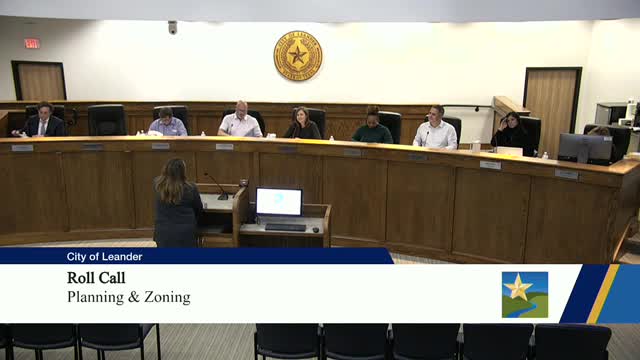
City engineer Emily Truman presented the city's current approach to funding transportation improvements and proposed narrowing when developments can avoid roadway construction through roadway adequacy payments (RAP).
Truman said Leander's 2021 transportation master plan identifies about $320,000,000 in transportation needs over the next 10 years and that the city's impact-fee study (completed in 2022) produced maximum assessed fees by service area. Council established a collection rate of 50% of the maximum assessed fee for residential development and 10% for nonresidential developers; staff began collecting those reduced rates in January 2024. Truman told council those collection levels, combined with current RAP practice, mean the city is not collecting enough to fund intersection or signal work that TIAs show is needed.
Truman and consultant Ben Plett described three related tools used by the city: systemwide roadway impact fees (RIFs), subdivision roadway adequacy standards that can require dedication or construction or accept payment in lieu (RAP), and site-specific traffic impact analysis (TIA) requirements that commonly produce improvements such as deceleration lanes or partial participation in larger projects. Staff recommended limiting RAP waivers to roads that meet or exceed the city's minimum standard (described in discussion as roughly a local two-lane road with curb and gutter) and reserving RAP for truly substandard roads where pooled payments are needed to allow one developer to build an improvement.
Other staff suggestions included: - No longer allowing right-of-way dedication to be eligible for additional offsets from roadway impact fees when collection rates remain below the maximum assessed fee. Staff argued the difference between the maximum assessed fee and the local collection rate should be considered the city's contribution toward a developer's dedication. - Considering increases in the RIF collection rate for residential and possibly commercial development (examples discussed included moving from 50% to 65% or 75% of the maximum assessed fee) and providing illustrative before/after examples for specific developments. - Automating the impact-fee calculation in the city's development hub to increase transparency, instead of a manual customer worksheet. - Keeping existing TIA requirements unchanged.
Council members asked for clearer application rules so the standard for "substandard" versus "meets minimum city standards" would be objective and not subject to inconsistent interpretation. Mayor Christine DeLisle and others requested sample calculations showing how higher collection rates would affect recent projects (for example, the County Road 280 area) and asked staff to return with example scenarios for several developments where the current approach had failed and others where it had worked. Staff also said a full update to the roadway impact-fee study is due in 2027 but could be done sooner to better capture recent inflation and construction-cost increases.
The discussion concluded with council direction to return recommendations and scenario examples on a regular meeting agenda (rather than an additional workshop unless more time is needed). No ordinance or fee change was adopted at this meeting.