
Town engineer outlines Exit 10 TIF bond to extend sewer, water and river crossing
Get AI-powered insights, summaries, and transcripts
Subscribe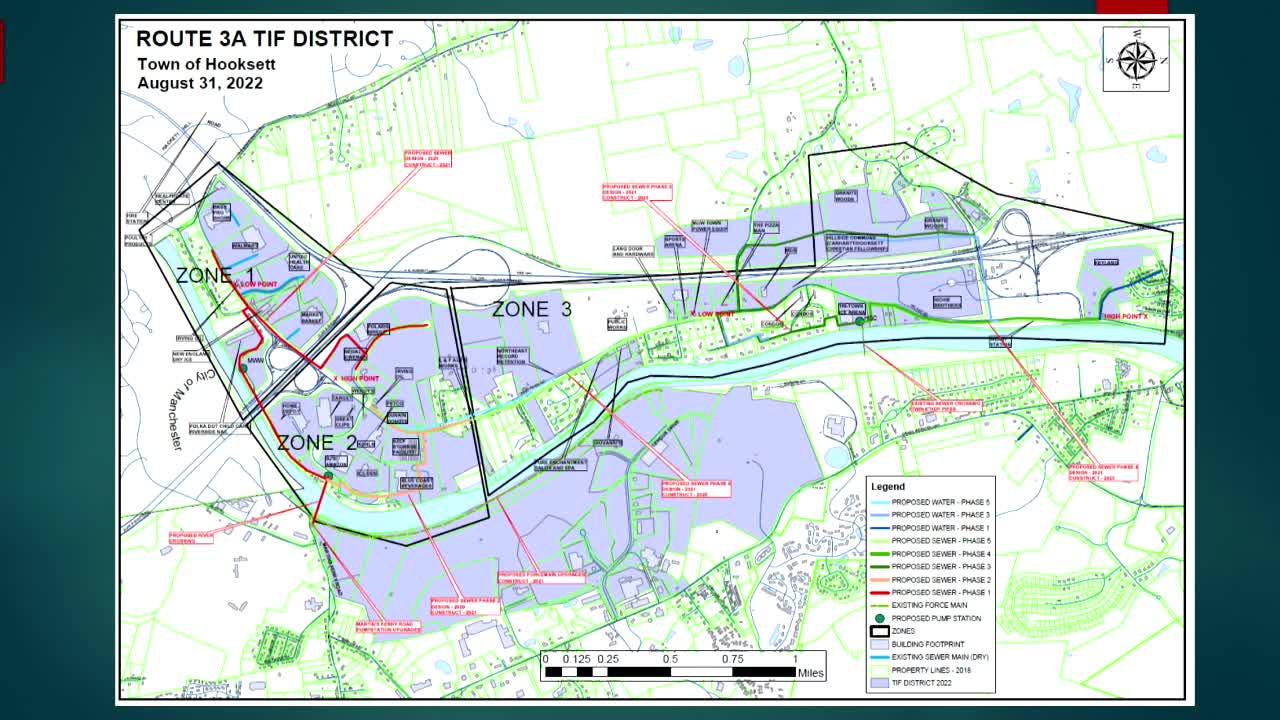
Summary
Town engineer Bruce Thomas described Article 3, a proposed tax‑increment financing bond to fund a package of sewer and pump station upgrades and a river crossing in the Exit 10 area. Staff said the project plans to use captured TIF revenues and existing grants rather than new town tax dollars; schedule and easements remain to be finalized.
Bruce Thomas, the town engineer, presented Article 3 and described the Exit 10 TIF district and the infrastructure package the warrant article would fund. "The blue is the Hooksett TIF district," Thomas said, explaining that a TIF captures incremental tax value in a defined area to help fund public improvements. He told the committee the project scope includes a new river crossing, upgrades to an existing force main, pump station upgrades, and a new pump station near Quality Drive.
Thomas provided order‑of‑magnitude engineer estimates for major components and said portions of several costs would be shared with the Hooksett sewer commission. He said the force‑main upgrade had an engineer estimate of about $4.2 million, and other upgrades and crossings raise the package to roughly $10 million in total. Thomas said the force‑main upgrade cost would be split with the sewer commission and that the work would be awarded as TIF funds become available. Committee members asked whether the article would have a tax rate impact; Thomas replied that the TIF captures the incremental value in the district and that the article relies on captured revenues and developer funding rather than a new general‑town tax levy.
Committee members asked about timing, easements (including one with Southern New Hampshire University), and whether existing businesses would be required to tie into sewer when lines become available. Staff said some easements remain to be finalized and that the project is likely to span several years; discussions with potential private contributors were the subject of continued outreach.