
Colleyville council tables request to allow prayer room at Village address after neighbors raise safety and parking concerns
Get AI-powered insights, summaries, and transcripts
Subscribe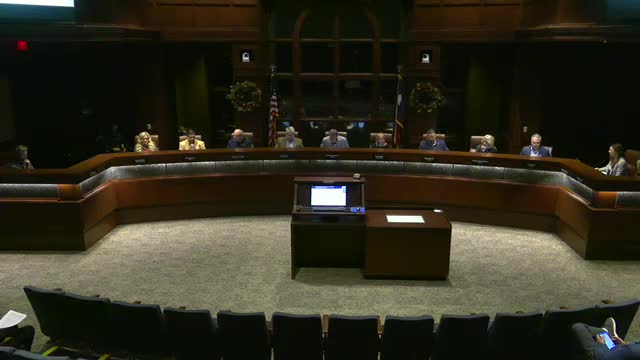
Summary
Colleyville Mayor Linda Butier and the City Council on Jan. 7 tabled a proposed amendment to the Village Planned Unit Development that would have allowed a religious-use "prayer room" at 55 Main Street, Suite 100, saying neighbors and the applicant should meet before the council's next action.
Colleyville Mayor Linda Butier and the City Council on Jan. 7 tabled a proposed amendment to the Village Planned Unit Development that would have allowed a religious-use "prayer room" at 55 Main Street, Suite 100, saying neighbors and the applicant should meet before the council's next action.
The move came after Ben Bridal, the city’s director of community development, told council that the Planning and Zoning Commission voted 4–2 to recommend broadening the PUD to permit "religious institution use including but not limited to prayer, ministry, religious studies and pastoral counseling." Bridal said existing Village PUD language does not specifically list religious uses.
The applicant, identifying himself as Alvaro Matewala of the House of Prayer, told the council his group offers free pastoral counseling and prayer sessions and said typical gatherings are small, "no more than 20" people. He said rising rent at his current location prompted the search for new space and that a prospective landlord offered two years' free rent if the group made necessary interior improvements.
Residents from units in the same building and a neighboring complex spoke in opposition. Douglas Gilliland, who lives at 55 Main, said the neighborhood is primarily residential and that the proposed entrance "is well hidden among residents," adding: "I would ask you this evening to consider tabling this. I would like to invite the user to meet with our residents." Debbie Pilgrim, a 33 Main resident, told council she is "not opposed to the prayer room," but she opposed the proposed location because it does not front a parking lot, would increase foot traffic under residential balconies and sits adjacent to a school on the second floor. Pilgrim also asked who would control or sign in attendees and whether the space could become a meeting location for larger groups.
Council members pressed the applicant on hours and attendance. Matewala described weekday early-morning prayer from about 6:30–8 a.m., occasional ladies' groups at about 10 a.m., biweekly youth prayer meetings and an occasional larger monthly gathering. He said the group's work includes referrals to professional counselors when needed.
Mayor Butier moved to table Ordinance 0-25-2312 to a date-specific second reading on Feb. 4 to allow the applicant and neighbors time to meet. Council approved the motion 7–0.
The first reading remains on the record; council did not adopt or deny the amendment and will take further action at the Feb. 4 meeting unless the applicant withdraws or modifies the request.