Get Full Government Meeting Transcripts, Videos, & Alerts Forever!
Get email alerts on the Economic Review topic
No spam. Unsubscribe anytime.
Building Code group outlines process for cost-benefit, small-business economic reviews and schedules public hearings
Summary
The IBC technical advisory group reviewed the State Building Code Councilrequirements for a cost-benefit analysis and a small-business economic impact statement for proposed 2024 code changes, flagged several items for further study, and scheduled public hearings next week to gather quantifiable input from affected parties.
The IBC Technical Advisory Group for the State Building Code Council met Sept. 3 and discussed its role in reviewing economic analyses for proposed amendments to the 2024 building code package. Dustin (staff member) told the group the council must complete two separate reviews before adoption: a high-level cost-benefit analysis required under the Administrative Procedure Act and a small-business economic impact statement under the Regulatory Fairness Act (RCW 19.85).
Dustin said the cost-benefit task is focused on whether the benefits claimed by a proposal are achievable at a reasonable cost, while the small-business review is intended to identify potential disproportionate impacts on smaller firms and requires soliciting quantifiable input from affected businesses. "The small-business economic impact statement is...designedto solicit input from the public to get a justifiable dataset so that we can write this report," Dustin said.
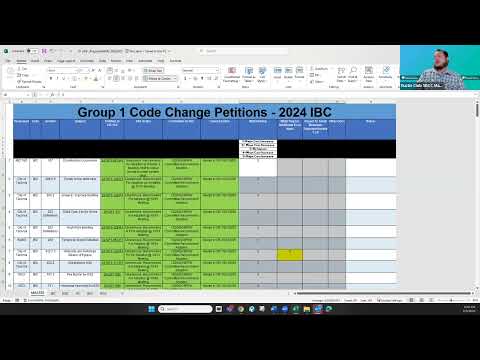
The group reviewed staffand work-group ratings for a short list of flagged petitions, ranging from clarifications to items that may change costs or processes for plan reviewers and inspectors. Members noted that enforcement and plan-review burden is a component of economic impact and should be captured where proposals increase required review or inspection time. "Additional plan review time does equate to some additional costs for most developers," one member cautioned.
The technical advisory group set two public hearings for the following Wednesday and Thursday to gather written and oral testimony on flagged items. Dustin said the meetings will provide stakeholders an opportunity to supply the specific, quantifiable data the Regulatory Fairness Act requires. The TAG will send its compiled recommendations and the resulting economic statements to the council in advance of rule-filing deadlines.
Outcomes and next steps: the TAG asked staff to post the work-group spreadsheet and supporting documents on the IBC tag page, flagged several proposals for deeper review (notably ASCE Supplement 2 on flood loads), and invited small businesses and designers to submit written testimony and attend the hearings.
Quotes in this article are drawn from meeting remarks by Dustin and TAG members recorded during the Sept. 3 session.