Get Full Government Meeting Transcripts, Videos, & Alerts Forever!
Get email alerts on the Wildfire topic
No spam. Unsubscribe anytime.
Sheriff: Stoner fire growth prompts evacuation contingency plans; Down Valley Park identified as shelter site
Summary
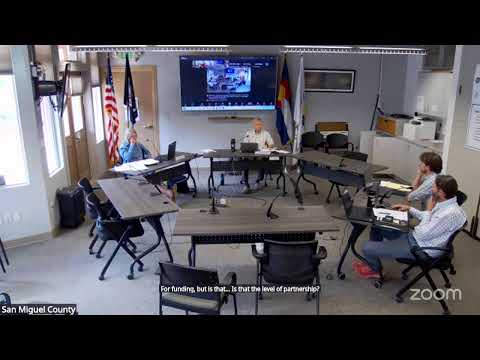
San Miguel County Sheriff updated commissioners on regional wildfires and evacuation planning on Aug. 13. The Stoner fire gained ground and moved into mixed fuels; county and Dolores County emergency managers are preparing dual evacuation plans and identified Down Valley Park as the primary shelter site with Lawson Hill as secondary. The sheriff
San Miguel County Sheriff provided an operational update on Aug. 13 and described contingency plans should the Stoner fire move toward nearby communities.
The sheriff said the Stoner fire expanded substantially over the prior 24 hours and has moved into areas of younger aspen growth, a change that can reduce burn intensity compared with mature conifer. The county remains in coordination with state, federal and neighboring‑county fire and emergency managers.
Sheriff staff and Dolores County officials are preparing two parallel evacuation contingencies depending on fire direction: one that would move affected residents north and another that would move them south. The sheriff proposed designating Down Valley Park as the primary reception/shelter location because it offers potable water, restrooms and a covered cook/serving area; Lawson Hill soccer fields were identified as the secondary or overflow site. The sheriff and county staff said they will coordinate logistics (porta potties, public notices, and any temporary closures) and keep commissioners apprised.
The sheriff also reported that the Rainbow Gathering currently in the area is substantially smaller and more cooperative than previous gatherings, with no reported incidents tied to local businesses or increased public‑safety calls.
Commissioners asked that emergency planning use existing county property where possible and that staff reach out to local site owners where contingency plans would rely on private or homeowner‑association lands.