Get Full Government Meeting Transcripts, Videos, & Alerts Forever!
Get email alerts on the Animal Welfare topic
No spam. Unsubscribe anytime.
Central Missouri Humane Society asks Columbia for $5.5 million toward new shelter
Summary
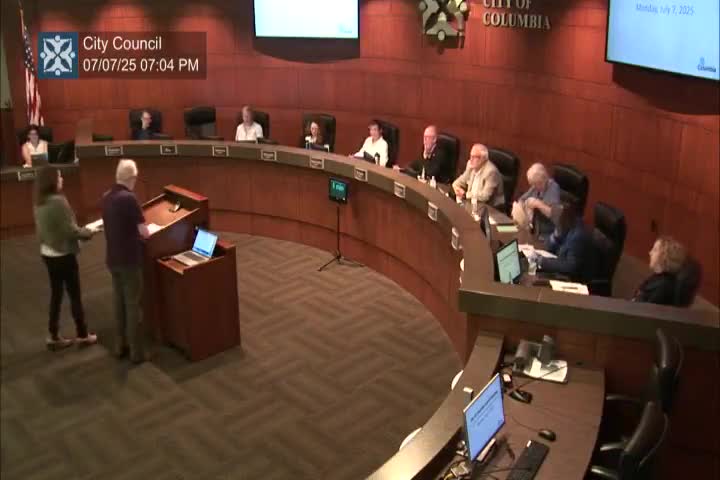
Representatives of the Central Missouri Humane Society asked the Columbia City Council on July 7 for a city contribution toward a planned animal care campus on East Brown School Road, saying the organization’s current building is beyond repair and that the shelter performs substantial municipal animal‑control functions.
Representatives of the Central Missouri Humane Society asked the Columbia City Council on July 7 for a city contribution toward a planned animal care campus on East Brown School Road, saying the organization’s current building is beyond repair and that the shelter performs substantial municipal animal‑control functions.
“We are the only open‑admission animal shelter in Boone County,” said Michelle Casey, associate campaign manager at the Central Missouri Humane Society. She told council the shelter takes in every stray and most bite cases and often does so without sufficient resources. “This really isn't a CMHS project. It's really a community project, and we just cannot do this alone.”
Steve Smith, a member of the shelter’s board of directors, said construction estimates prepared by the project architect and contractor currently place the cost near $25,000,000 and that the Humane Society believes a fair city contribution—based on the use of the shelter by the city’s animal‑control division—would be roughly $5,500,000. Smith said the estimate reflects the time the shelter is required to hold animals brought in by animal control but does not include care beyond required holding periods.
Casey and Smith said the nonprofit has purchased a 17.5‑acre property on East Brown School Road and aims to build an animal care campus that would include hospital‑level facilities. Smith said private donors are expected to fund most of construction, but that private philanthropy is more likely to invest if the city shows a commensurate contribution.
Council did not take action on the request during the meeting. Rebecca Roslett, the city’s public health director, later described elements of the city’s existing contract with the Humane Society: in FY2026 the contract is budgeted at $229,890 and covers items such as kennel availability and some veterinary services. Roslett told council the city applies an annual CPI increase to the contract and that the county pays one‑third of the contract amount.
No formal city financing was proposed or approved at the meeting. Councilmembers and staff suggested follow‑up conversations and asked for information about the shelter’s campaign, fund sources and the scope of services it provides under the city contract.
Ending: The Humane Society’s representatives asked the council to explore funding options and to meet with the organization to discuss possible city contributions and alternatives if a direct appropriation is not feasible. The request will return to future budget or follow‑up discussions rather than as an immediate action on the July 7 agenda.