Get Full Government Meeting Transcripts, Videos, & Alerts Forever!
Get email alerts on the Wireless Infrastructure topic
No spam. Unsubscribe anytime.
Herriman planners continue wireless code rewrite and linked cell-tower permit after questions on "stealth" rules and setbacks
Summary
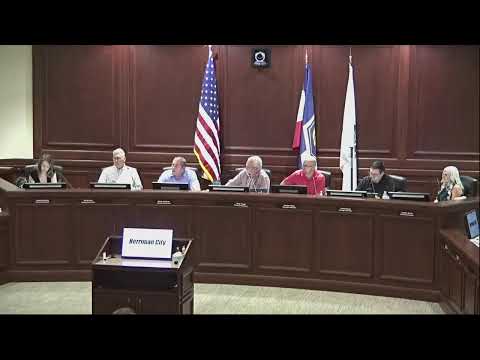
Herriman City Planning Commissioners on July 2 continued consideration of a proposed text amendment to the city’s land development code and a linked conditional-use permit for an 80-foot wireless monopole near Zions Bank Stadium.
Herriman City Planning Commissioners on July 2 continued consideration of a proposed text amendment to the city’s land development code and a linked conditional-use permit for a proposed 80-foot wireless monopole near Zions Bank Stadium.
The commission deferred action after more than an hour of technical and legal briefing and questions aimed at sharpening the ordinance language on "stealth" design, measurable setbacks from residences and schools, and clearer incentives and standards to encourage colocation of multiple carriers on a single support structure.
Why this matters: the applicant, Skyway, and its engineering consultants said the monopole would address a documented coverage gap in the commercial area near the stadium and would be designed to accept multiple carriers. Michael Malloy, planning staff, told the commission the proposed code is intended to align local standards with FCC rules while providing more robust local design and siting standards than Herriman’s older ordinance. The commission asked for language that makes those protections and preferences explicit and measurable.
What was proposed: Mark Williams, representing Skyway, presented propagation maps and a site plan for a monopole sited on a C-2 commercial parcel. Williams said the structure would be painted and screened per code, would be engineered to accommodate colocation and would hold up to four carriers. He said the company and staff worked together on the draft regulations and that Skyway sought a recommendation so the application could proceed to the City Council.
What commissioners asked for: commissioners pressed staff and the applicant for concrete, codified triggers for when a facility must be disguised beyond simple paint (for example, when it is near residential areas or visible from key vantage points); they also sought a clear, enforceable method to measure separation from residences, schools and playgrounds (the draft includes a 500-foot reference to schools in some circumstances and a 1x height-from-property-line setback in others). Several commissioners said the current draft’s stealth language risks being interpreted as "paint-only" stealth unless edited to require substantive concealment methods in visible locations or where adjacent to housing.
Applicant responses and colocation history: Skyway representatives and consultants explained they had pursued co-location alternatives (including an existing Providence Hall structure and sites at nearby institutions) but ran into structural, spacing and availability constraints. The consultants said monopoles typically offer the easiest path to co-location because they are engineered to carry multiple carriers and that commercial owners are often reluctant to host facilities when redevelopment is planned.
Outcome and next steps: the commission voted unanimously to continue both the text-amendment item (5.1) and the site-specific conditional-use permit (4.2) to a future meeting, directing staff to return with codified changes that address (1) a clearer and measurable definition of "stealth" (when paint alone is not sufficient), (2) a specific approach to setbacks or distance metrics from residences and schools, and (3) firmer language to promote and verify colocation opportunities where technically feasible. Staff said it will prepare a codified redline showing how the proposed language will appear in the city code and return for additional review before council consideration.
Votes and formal actions recorded at the meeting: the commission recorded a unanimous roll-call approval of routine minutes and a separate unanimous approval of a one-year subdivision extension for the Walker Family subdivision (item 4.1). The motions to continue the wireless text amendment (item 5.1) and the conditional-use (item 4.2) also passed unanimously. No public comment was received in writing or in person on the code amendment prior to or during the hearing.
What remains unresolved: whether the code should quantify stealth requirements by height or by distance-to-residence thresholds, and what technical evidence the city will require to find public/quasi-public properties "unavailable" for colocation. The commission asked staff to prepare a draft that includes explicit criteria for when stealth treatments must include substantive concealment (for example, built forms that incorporate antenna arrays) and to propose measurable setbacks tied to pole height or to structure/property-line distances.
Background: staff and the applicant cited federal statutes and FCC decisions (Telecommunications Act of 1996 and later FCC orders) limiting outright prohibition of wireless facilities and protecting deployment where there is a demonstrated coverage gap; the draft city code attempts to respect those requirements while creating clearer local design, setback and colocation standards.
The commission will revisit the items at a future hearing after staff prepares the requested codified revisions and a redline that compares the existing code to the proposed language.