Get Full Government Meeting Transcripts, Videos, & Alerts Forever!
Get email alerts on the Housing Policy topic
No spam. Unsubscribe anytime.
Board Approves Fee Waiver for Downtown Office-to-Residential Conversions with Square-Foot Cap
Summary
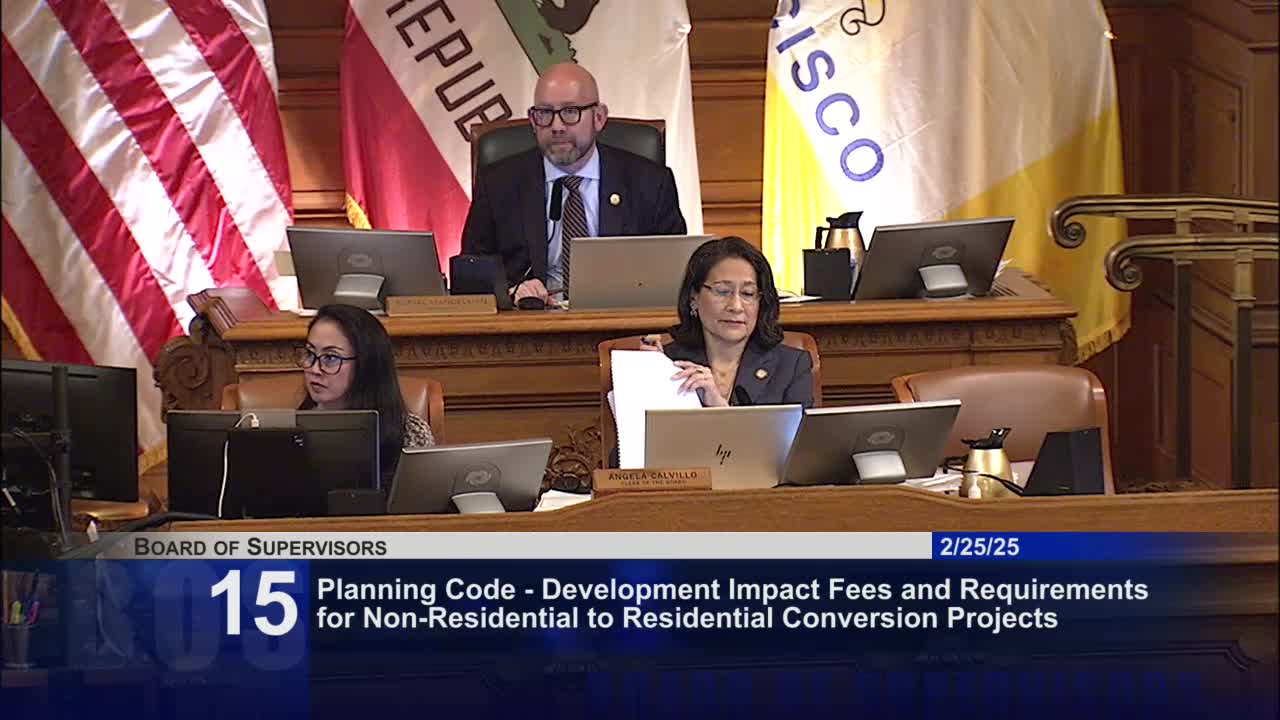
The Board approved on first reading an ordinance to exempt certain downtown office-to-residential conversions from some development impact fees and inclusionary housing requirements, with a 7,000,000-square-foot cap added as an amendment.
The San Francisco Board of Supervisors on Feb. 25 approved on first reading an ordinance that waives certain development impact fees and some inclusionary housing requirements for a targeted set of downtown office-to-residential conversion projects, subject to new amendments that impose a 7,000,000-square-foot cap on the total square footage eligible for the waiver.
Proponents said the measure will help unlock stalled conversion projects and accelerate housing production downtown. “Underutilized and vacant office buildings offer us an incredible opportunity to unlock more units of housing,” Supervisor Matt Dorsey said during debate, urging support for the legislation’s aim to “stimulate housing development in downtown.” (Supervisor Dorsey, 00:20:52.)
Supporters from the Land Use Committee and the mayor’s office described the cap as a compromise to address equity and fiscal concerns; Supervisor Sauter introduced the cap amendment and said it translated roughly to about 7,000 converted units. The amendment passed and was included in the ordinance brought forward for first reading.
Opponents raised fiscal and equity concerns. Several supervisors — including Supervisor Chan and Supervisor Walton — said waiving impact and inclusionary fees without a time-limited sunset could undermine long-term affordable housing funding and disproportionately burden priority equity neighborhoods. Supervisor Jackie Fielder highlighted historical displacement in neighborhoods such as SoMa and the Tenderloin and said the city should prioritize affordable housing in those areas.
On the roll call after amendment, the ordinance passed on first reading by a vote of 9–2, with Supervisors Melgar and Fielder voting no. The item includes referral language to the Inclusionary Housing Technical Advisory Committee for feasibility review as part of ongoing oversight.