Get Full Government Meeting Transcripts, Videos, & Alerts Forever!
Get email alerts on the Refuse Rates topic
No spam. Unsubscribe anytime.
Recology proposes three-year rate increase and local mixed-waste processing line; city staff flag permitting risks
Summary
Recology presented a three-year residential rate application that would raise rates by 18.18% in year one (2026), 7.53% in 2027 and 3.86% in 2028 and proposed a local mixed-waste processing line at 501 Tunnel contingent on air-district permits and an outlet for recovered products. Department staff said the line could recover roughly half of the
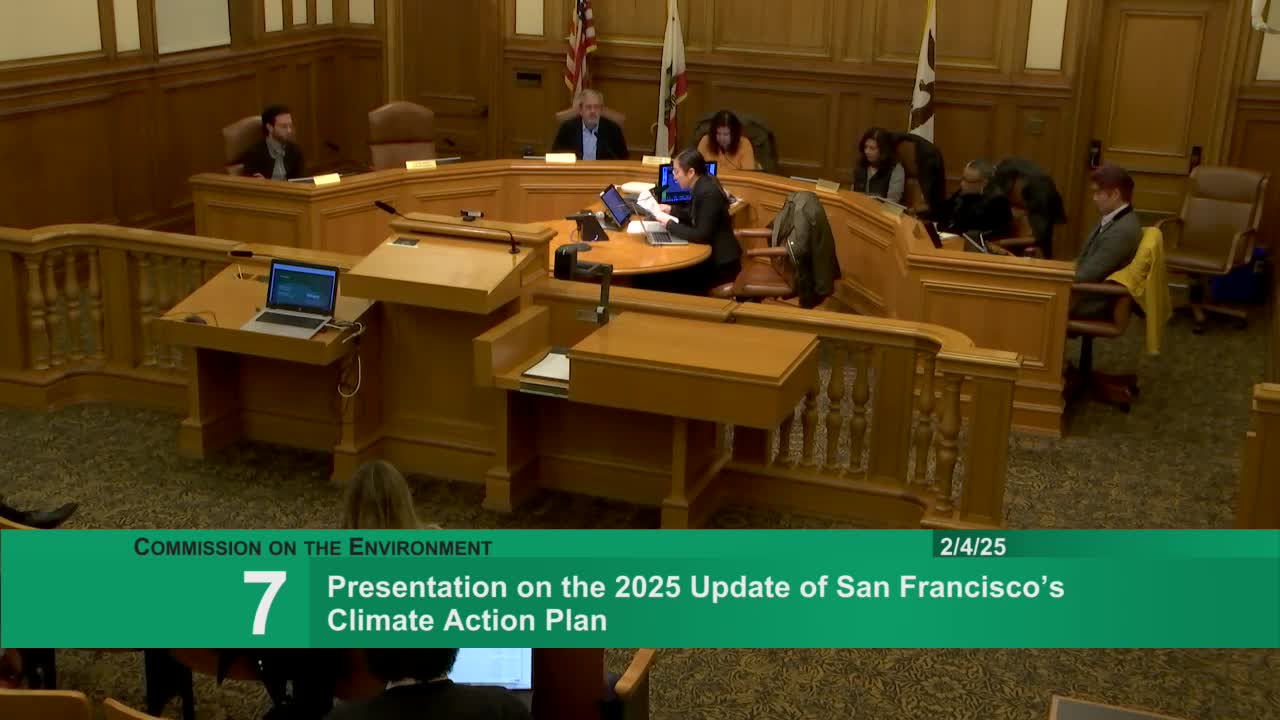
Recology presented its rate application to the Commission on the Environment on Feb. 4, proposing an 18.18% increase for rate year 2026, 7.53% for 2027 and 3.86% for 2028, and outlined several program enhancements aimed at increasing diversion and reducing contamination.
The refuse-rates administrator (Comptroller's Office) framed the proposal within the Prop F process that moved refuse-rate administration to the controller. Jay Liao said the application includes a roughly $13.7 million balancing-account deficit carried from prior projections and staff identified about 8 percentage points of the proposed 2026 increase as structural (revenue shortfall, a past payroll projection error and a new city business tax). Liao said staff will analyze the application and propose a rate order later in the process.
What Recology proposed
- Rate schedule: 18.18% (2026), 7.53% (2027), 3.86% (2028). Recology estimated the first-year increase as about $8.50 per month for a single-family household on default service.
- Mixed-waste processing: Recology described a contingent plan to repurpose an existing material-recovery facility at 501 Tunnel into a processing line capable of handling about 500 tons per day and recovering an estimated 49% of otherwise-landfill-bound material. The company and department staff said the project would be dedicated to San Francisco and could avoid exporting mixed waste, but it requires an Authority to Construct from the Bay Area Air Quality Management District and a reliable outlet for recovered compost and materials. Capital cost was described in the presentation near $35 million.
- Organics depackager and other improvements: Recology proposed installing a depackager to improve organics yield from roughly 50% to about 66—67%; adding illegal-dumping pickup routes; expanding outreach and container labeling; piloting onboard camera systems and contamination monitoring; reintroducing citywide compost giveaways and expanding mattress recycling by linking to state Mattress Recycling Council programs.
Questions and concerns
Commissioners and staff pressed Recology on timeline, permitting and downstream markets for recovered compost and recyclables. Recology said the mixed-waste processing line is on a contingent schedule and, if milestones are met, processing would start in 2027 with the facility more fully operational later in the rate cycle. The refuse-rates administrator and department staff stressed that the proposal's trash-processing contingent depends on air-district approvals and confirmed the need to identify and secure market outlets for the compost and other recovered streams.
Why it matters
Department staff and commissioners said a local processing line could materially increase recovery and help the city meet 2030 diversion goals, but both noted the project is capital intensive, contingent on permits and markets, and would raise rates if approved. Commissioners also emphasized robust ratepayer outreach and asked for tighter metrics and reporting as the controller develops a proposed rate order.
Next steps
The refuse-rates administrator will continue public interrogatories, community outreach, focus groups and hearings before presenting a proposed rate order in April. The rate board will hold subsequent hearings before final decisions.