Get Full Government Meeting Transcripts, Videos, & Alerts Forever!
Get email alerts on the Zoning Smoke Shops topic
No spam. Unsubscribe anytime.
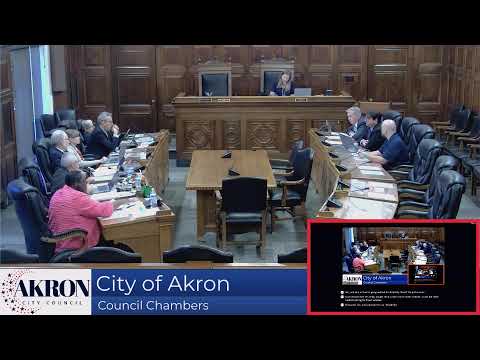
Akron planning staff backs ordinance to license and space 'smoke shops'; council questions enforcement and grandfathering
Summary
Planning staff on the Akron Planning Commission urged the city to adopt a zoning text amendment that would define “smoke shops,” require a municipal license for new stores that meet that definition, and limit the locations where new shops may open.
Planning staff on the Akron Planning Commission urged the city to adopt a zoning text amendment that would define “smoke shops,” require a municipal license for new stores that meet that definition, and limit the locations where new shops may open.
The proposal would allow smoke shops in commercial retail districts (U-3 and U-4) but require them to be at least 1 mile from another smoke shop and at least 500 feet from a church, public library, public playground, public community center, public park, school or community learning center. Planning staff said the rule aims to reduce clustering of shops that sell nicotine, kratom and hemp-derived or synthetic cannabinoid products and to discourage retail blight created by oversaturation.
"The continued proliferation of smoke shops encourages unhealthy activities with long-term consequences for individuals and the community," Planning Department presenter Mike Antonucci told the committee, recommending approval alongside the planning commission.
Under the text change, a smoke shop would be defined as any retail establishment where 10% or more of floor, shelf, storage or display area is used to sell listed products, or any store that derives 25% or more of its revenue from those sales. The proposed list of smoke-shop products includes CBD and hemp-derived or synthetic cannabinoids (for example, delta-8 or delta-9 THC), kratom, aerosolized or vaporized nicotine and related electronic smoking devices and accessories. The draft would exempt traditional tobacco products and products authorized by the U.S. Food and Drug Administration.
Council members asked detailed procedural and enforcement questions during the public meeting. Councilwoman Tina Boyes pressed staff to clarify that the 10% metric applies to actual product floor/display area and not to marketing or signage. Planning staff confirmed that signage is regulated separately under sign code and cannot be targeted by the sign code to a specific business type.
Council members also asked how the city would identify existing businesses that meet the thresholds (10% of floor area or 25% of receipts). Antonucci said staff would compile a list from existing records, send multiple rounds of letters asking operators to apply for the required license, and use a combination of zoning inspections and receipts/floor-plan documentation to confirm compliance. The draft ordinance carries a proposed fine for unlicensed sales and treats the violation as both a licensing and a zoning enforcement matter.
Council members repeatedly raised grandfathering and enforcement questions. Staff said businesses already operating would not be required to close immediately, but new openings would need to meet spacing and licensing rules. If a grandfathered business closed and the premises were sold or a new operator sought to open, the buyer or new operator would be required to apply for the license and comply with spacing requirements unless the business was purchased as an ongoing operation.
Members also asked whether the city could inspect businesses to confirm the 25% revenue threshold; Antonucci said the licensing process would require documentation such as floor plans and receipts when there was reason to suspect a shop met the definition. The proposed licensing ordinance includes a $500 fine for selling without a license as part of an enforcement ladder; zoning fines would also apply where relevant.
Why it matters: Planning staff framed the amendment as a measured attempt to stop clustering of smoke shops and the attendant retail blight while preserving retail uses in commercial corridors. Council members signaled broad support for the proposal but asked for more detail on how the city would identify existing businesses that meet the definition, how enforcement would be sequenced, and how state-level regulatory changes (for example, around hemp products) might affect local policy.
What’s next: Planning staff and the sponsor said there is a companion licensing ordinance and that they would circulate drafts; the committee invited additional review time and follow-up with the health department and law department.
Quotes: "The city is proposing this text change to the zoning code to reduce the number of smoke shops clustering near one another and near certain uses such as churches, schools, parks, and libraries," Mike Antonucci, Planning Department. "There's a hefty fine proposed if you sell without a license," Antonucci said regarding enforcement.
Ending note: Committee members asked staff to return with implementation steps and to monitor state and federal developments that could change the underlying product mix or regulatory framework.