Get Full Government Meeting Transcripts, Videos, & Alerts Forever!
Get email alerts on the Policy And Rulemaking topic
No spam. Unsubscribe anytime.
Rules committee advances ADA accessibility work, multiple LEA policy changes and emergency replication rules with $2,500 fee
Summary
The Tennessee Public Charter School Commission’s Rules, Policy & Governance Committee on July 24 advanced ADA web/mobile accessibility work, approved multiple LEA policy updates (including a statutory cell-phone restriction framework) and adopted emergency replication rules that set a $2,500 application fee and defined decision timelines.
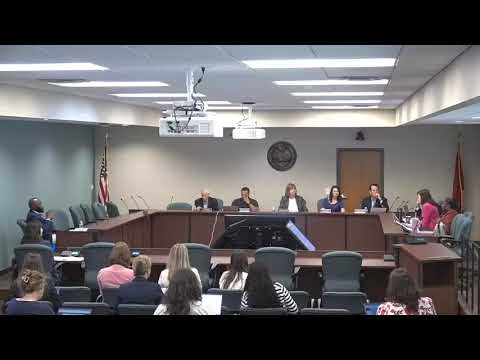
The Rules, Policy & Governance Committee of the Tennessee Public Charter School Commission on July 24 reviewed an ADA accessibility initiative, approved a slate of LEA and commission policy changes to align with new statutes, and advanced emergency and permanent rules governing replication (direct) applications that include a $2,500 application fee and defined timelines for decisions.
Pam Layman, manager of strategic initiatives, summarized the Department of Justice final rule updating Title II of the Americans with Disabilities Act, which requires web content and mobile applications operated by public entities be made accessible by April 2026. Layman said staff are working now to improve documents and web content by adding descriptive links, ensuring color contrast, adding alternative text for images and maintaining logical reading order in PDFs and slide decks.
General Counsel Ashley Thomas presented a package of LEA policy amendments to align with statutory changes and reduce administrative burden for schools. Substantive changes included updated smoke-free signage requirements, removed reporting-calendar references on revenues and school fees, and clarified inventory and equipment definitions. Transportation guidance was amended so charter-school staff — not commission staff — handle issuing bus driver certificates. Insurance language was updated to reflect statutory language requiring teachers to be offered group insurance plans. The policy on internet safety (LEA policy 4406) was amended to require schools to adopt Internet-safety protections that address student access to email, chat and other online communications. The committee also approved a new LEA policy (6318) covering pre‑K alternatives to exclusionary discipline and adjusted restraint/isolation record responsibilities.
On cell phones, staff explained the 2025 statute requires each school to develop a policy restricting devices capable of sharing data during instructional time, while preserving exceptions for instructional use, health monitoring devices, ILP/IEP/504 accommodations and accessibility technologies. Committee members discussed implementation approaches and costs; staff said the legislature left compliance options open-ended and schools can adopt lower-cost operational approaches.
The committee also considered special education policy 1801 on final reading. After stakeholder engagement the policy was revised to clarify the commission’s role when external placements for students with disabilities are necessary, emphasize the IEP team determination and require that schools demonstrate efforts to serve students before seeking external placements.
Ashley Thomas presented a new replication (direct application) rule as an emergency rule and companion permanent rule. The rule requires a letter of intent and sets the application fee at $2,500, outlines completeness requirements for an application, requires notification to local LEAs, specifies a public hearing and a capacity interview, and sets a 90‑day decision timeline for initial applications and 60 days for amended applications. The emergency rule was approved by the committee to be effective immediately; permanent rulemaking will follow public comment and a rulemaking hearing. Thomas said the emergency rule prevents a gap in governing authority should applications be submitted this fall.
The committee also updated rules governing amendment appeals to reflect 2025 legislative changes that require authorizers to report petitions for amendments to the commission and that governing bodies file letters of intent with both their authorizer and the commission.
Speakers quoted and attributed in this report are those who spoke at the meeting: Pam Layman, manager of strategic initiatives; Ashley Thomas, general counsel; Chair Smith; and Hayden (staff).