Get Full Government Meeting Transcripts, Videos, & Alerts Forever!
Get email alerts on the Impact Fees topic
No spam. Unsubscribe anytime.
Council Indicates Consensus for Modest Increase to Public‑Buildings Impact Fees; Staff to Proceed With Option 1
Summary
A consultant presented updated public‑buildings impact‑fee calculations. Staff proposed a phased approach consistent with current impact‑fee law (Option 1). Council signaled consensus to proceed with Option 1 (no extraordinary circumstances). Proposed single‑family fee would rise from $516 to $615 based on the study's assumptions.
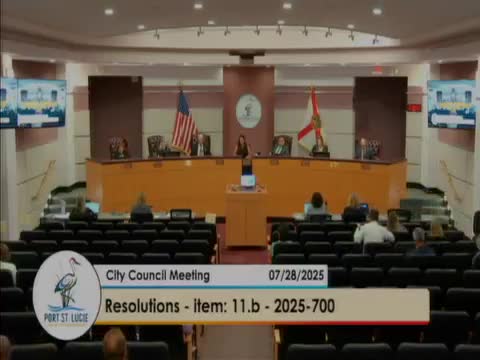
The council received a staff workshop and consultant presentation on a proposed update to the city’s public‑buildings impact fees.
Ben Griffin of Tishler Bise summarized the methodology and projections used to calculate the fees, explaining the three service components: administrative facilities (incremental methodology), public works facilities (plan‑based), and a planned parking facility (plan‑based). Griffin described population and nonresidential growth assumptions drawn from the city’s comprehensive plan and recent permit history, and showed how the proposed fees were calculated per person (residential) and per job (nonresidential).
Key figures presented - Proposed single‑family public‑buildings impact fee: $615 (current fee $516; a $99 increase, about 19%). - Study identifies maximum justifiable fees that are higher than the statutory phased amounts; state law currently requires phase‑in when fees rise more than specified thresholds unless a governing body invokes ‘‘extraordinary circumstances.’’ - Over the first four years the study projects roughly $5.9–$6.7 million in fee revenue depending on phasing and extraordinary‑circumstance options.
Options presented and council direction The consultant presented three options: Option 1 (no extraordinary circumstances; phased increases consistent with current law), Option 2 (use extraordinary circumstances only for residential to take immediate effect), and Option 3 (use extraordinary circumstances for all uses and adopt maximum justifiable fees immediately). Councilmembers generally favored Option 1 — proceeding without invoking extraordinary circumstances — citing conservative assumptions and the need for additional comparative information. Council asked staff for additional details comparing cumulative impact fees (all city and county fees) for single‑family homes and for further stakeholder outreach with the development community prior to final adoption.
Next steps Staff will bring the ordinance for first reading on August 4 with materials reflecting the selected option (Option 1) and provide supplementary tables requested by council (comparative fee totals and stakeholder feedback summaries). The proposed fees would take effect after adoption and per statutory timelines.