Get Full Government Meeting Transcripts, Videos, & Alerts Forever!
Get email alerts on the Budget Finance topic
No spam. Unsubscribe anytime.
Tennessee Public Charter School Commission committee approves PowerSchool procurement and amended FY26 budget, hears enterprise risk and staffing updates
Summary
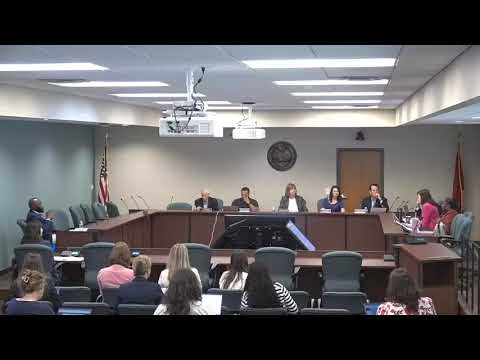
The business operations committee of the Tennessee Public Charter School Commission on July 24 approved a procurement for the student information system PowerSchool with a maximum liability of $65,000 and voted to adopt an amended FY26 budget, after presentations on enterprise risk management, staffing, office space and fiscal performance.
The business operations committee of the Tennessee Public Charter School Commission on July 24 approved a procurement for the student information system PowerSchool with a maximum liability of $65,000 and voted to adopt an amended FY26 budget, after presentations on enterprise risk management, staffing, office space and fiscal performance.
Executive Director Tess Stovall told the committee that state law requires agencies to complete an annual risk assessment under the Financial Integrity Act and that the commission aligns its objectives and KPIs to its strategic plan. Stovall said agencies must identify risks and controls for objectives such as ‘‘high quality charter schools’’ and described controls including a robust application review, preopening process, annual performance review and a 10-year renewal process to limit the risk that an approved charter school does not perform.
On staffing, Stovall said the commission has hired several new staff since March 2025, naming Maggie Stampley as director of school programs and support, Fatima Fall as student data analyst, Pam Layman as manager of strategic initiatives and Lawrence Walker as director of finance and operations. She also said the General Assembly authorized four additional FY26 positions to support portfolio growth and new statutory responsibilities.
Stovall said the commission will add nine seats on the eighth floor after coordinating with the Department of General Services and that, once those seats are filled, the office will move to a rotational seating model used across state government. She also told the committee that the U.S. Department of Education has paused certain federal grants the commission previously used (Title II, Title III and Title IV); she added that Title I and IDEA funds are not impacted and staff are coordinating with schools so those funds can be drawn down when appropriate.
Lawrence Walker, the director of finance and operations, presented fiscal updates including a FY24 true-up that resulted from Metro Nashville’s final per-pupil revenue calculation (about $14,860). Walker said the FY24 true-up required some Metro Nashville charter schools to repay a combined approximately $1,026,180; he noted that Rutherford Collegiate Prep owed roughly $375,000 because of a decline in average daily membership. Walker said FY25 expenditures are under budget, the commission projects a surplus and the authorizer fee is expected to cover about 98 percent of agency expenses for the year — ‘‘98 percent, we are very close to being at sustainability,’’ he said.
On procurement, Stovall explained that the commission uses PowerSchool under the Tennessee Department of Education contract to centrally report student data and requested committee approval for the estimated $65,000 liability for the upcoming year. Committee members moved and seconded the procurement item and the committee chair announced the ayes had it; the procurement was approved.
Walker presented an amended FY26 budget that updates revenue assumptions for FY25 TISA and accounts for schools opening or expanding in 2025–26; it also includes additional positions contained in the governor’s budget and the legislature’s appropriation. The committee voted to approve the amended FY26 budget and later approved a preliminary FY27 budget that assumes no additional growth beyond already‑approved expansions.
The committee also approved the commission’s remaining 2025 meeting dates, a 2026 quarterly calendar and other routine items. The committee chair closed the session and confirmed the next business operations committee meeting is scheduled for Oct. 16, 2025.
Speakers quoted and attributed in this report are those who spoke at the meeting: Tess Stovall, executive director; Lawrence Walker, director of finance and operations; Commissioner Griscom (acting chair for the business operations committee).