Get Full Government Meeting Transcripts, Videos, & Alerts Forever!
Get email alerts on the Endometriosis topic
No spam. Unsubscribe anytime.
Patients and clinicians urge creation of endometriosis task force after years of delayed diagnoses
Summary
Dozens of patients, clinicians and advocates urged the Joint Committee on Public Health to create an endometriosis task force, saying long diagnostic delays and inconsistent care have caused severe harm.
Dozens of patients, clinicians and advocates urged the Joint Committee on Public Health to create an endometriosis task force, telling lawmakers that long diagnostic delays and inconsistent care are causing severe harm.
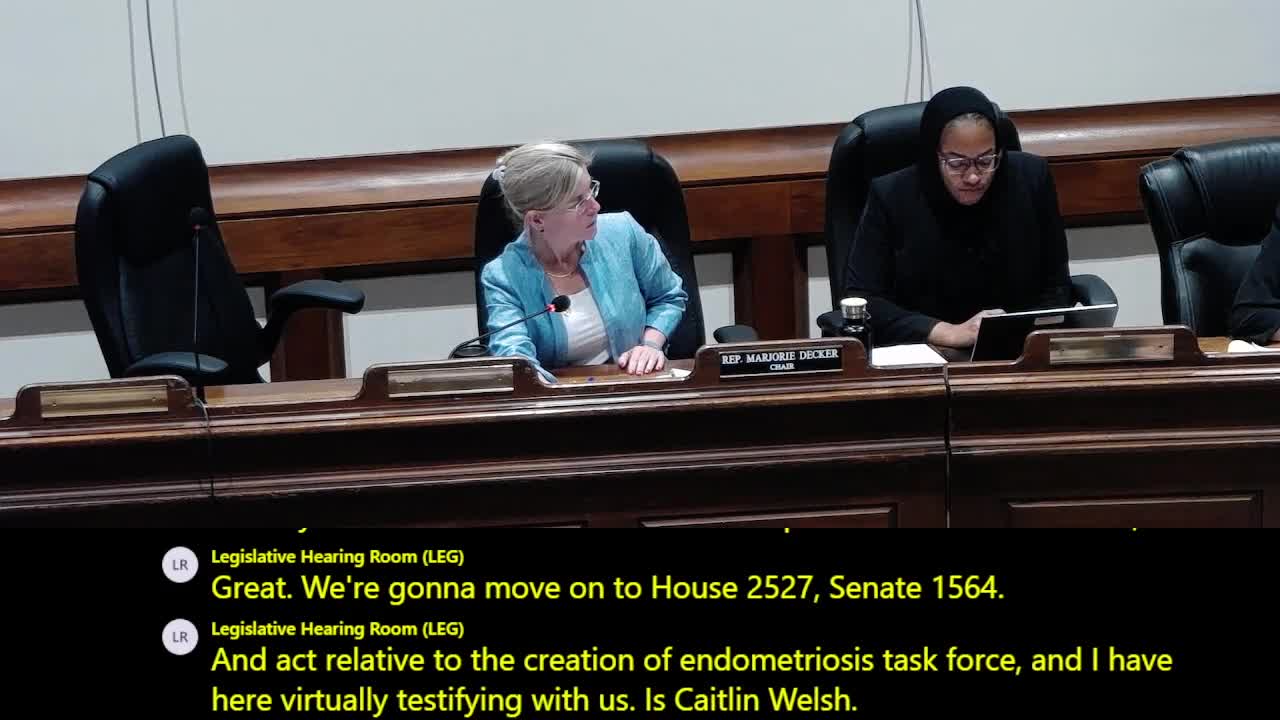
Patients described long paths to diagnosis — often many years and multiple specialists — and a range of outcomes from infertility to near‑death complications. "I suffered for over a decade before I was officially diagnosed," said Caitlin Culpe Welsh, a registered nurse, who described months of hospitalization and multiple referrals before excision surgery identified advanced disease.
Clinicians told the committee that the current system lacks a strategic blueprint. "We in medicine have this all wrong," said Dr. Malcolm McKenzie, an OB‑GYN who has focused on endometriosis for two decades. He argued the state needs coordinated research, training to expand excision surgery capacity, and a public health approach comparable to efforts in other countries.
Witnesses urged the committee to act on H.2527 / S.1564 / S.1638, bills that would assemble providers, patients, insurers and researchers to study diagnosis, treatment and training gaps. Patient advocates described frequent misdiagnosis, multiple unnecessary procedures, and long waits to see specialists, and said those delays can convert treatable disease into extensive scarring and organ damage that permanently reduces quality of life.
Advocates also stressed equity concerns. Several speakers said patients from underserved communities face longer waits and greater barriers to specialist care. Endometriosis Alliance of Massachusetts cofounder Kate Weldon LeBlanc noted Connecticut’s task‑force model and asked Massachusetts to adopt a similar, evidence‑based approach to reduce diagnostic delay and improve outcomes.
The testimony combined personal stories with clinical detail: speakers described occult microscopic endometriosis found only on biopsy, thoracic endometriosis requiring thoracic surgery, and the need for earlier use of diagnostic tools beyond laparoscopy. Several witnesses asked the committee to prioritize funding for research and to include measurable recommendations on training, referral pathways and insurer coverage.
The committee did not take a vote at the hearing. Advocates said they will submit written materials and asked legislators to move the bill forward so the state can reduce diagnostic delays and expand access to specialized care.