St. Paul HRA endorses temporary QAP change to allow 15-year downtown affordability for some 4% tax-credit projects
Loading...
Summary
The St. Paul Housing and Redevelopment Authority on a 5–2 vote endorsed a temporary change to the Minneapolis–Saint Paul Housing Finance Board’s 2026–27 Qualified Allocation Plan to allow certain 4% low-income housing tax-credit projects downtown to meet a 15-year minimum affordability period.
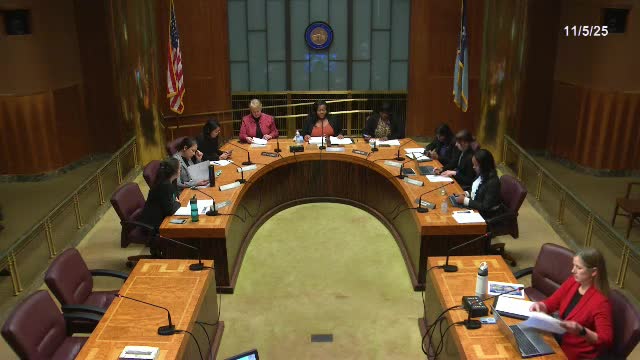
The St. Paul Housing and Redevelopment Authority on a 5–2 vote on November 2025 endorsed amendments to the Minneapolis–Saint Paul Housing Finance Board’s 2026–27 Qualified Allocation Plan (QAP) to allow select 4% low-income housing tax-credit projects in downtown St. Paul to carry a 15-year minimum affordability period for projects using the increased federal tax-credit capacity.
Director McMahon told commissioners the change is intended to help downtown projects move forward by leveraging federal tax-law changes that increase 4% tax-credit capacity beginning January 2026. “Just quick reminders, this is only for the 4% credits,” Director McMahon said, and the amendment applies only to the 2026–27 QAP and will return to the agency for review after that period.
Council President Commissioner Naker argued the change is a targeted, time-limited tool that would bring affordable units downtown that might not be developed otherwise. “We are going to be allowing those to spread beyond every other quarter of our city and use federal resources to get more affordable housing downtown than we would otherwise see,” Commissioner Naker said.
Chair Sherry Johnson opposed the amendment, saying she could not support reducing long-term affordability from 30 years to 15 years for downtown projects. “I am not gonna be able to support this proposed change today, for Downtown Saint Paul projects in particular, because I think public funding projects must provide the most consistent and dedicated levels of affordability,” Chair Johnson said, adding concern that multiple properties’ affordability periods could roll off in the 2035–2045 window.
Several other commissioners said the change is strictly limited to downtown, is only for the two-year QAP cycle, and would increase the city’s ability to attract affordable units without relying on scarce city dollars. Commissioners Joost, Coleman, Yang and Bowie expressed support; Commissioner Kim and Chair Johnson voted no.
The resolution was moved by Commissioner Naker; a second was not recorded in the transcript. The roll-call vote recorded the following: Commissioner Buoy — yes; Commissioner Coleman — yes; Commissioner Jost — yes; Commissioner Kim — no; Commissioner Naker — aye; Commissioner Yang — aye; Chair Johnson — no. The HRA adopted the resolution, 5–2.
The staff report and commentary note several limits and next steps: the change applies only to 4% credits (9% credits remain competitive), it is limited to downtown for the 2026–27 QAP cycle, and the matter will be returned for further review after the 2026–27 cycle to assess impacts and possible modifications.
Background and context: staff said the amendment is intended to use new federal tax-law capacity to support downtown conversions and otherwise hard-to-finance projects. Commissioners in favor said the approach avoids committing city subsidy in expensive downtown conversions and uses federal resources to increase affordable units. Opponents said the shorter affordability term risks a concentrated expiration of affordability in future decades and weakens Saint Paul’s long-standing affordability commitments.
The HRA did not adopt statutory language in this session; it recorded an endorsement to the Minneapolis–Saint Paul Housing Finance Board’s QAP for the 2026–27 cycle. The amendment and its effects will be monitored and revisited by the HRA when the 2026–27 QAP is re-presented for review.