Get Full Government Meeting Transcripts, Videos, & Alerts Forever!
Get email alerts on the Zoning Signage topic
No spam. Unsubscribe anytime.
Princeton council holds first reading on sign code update; council asks for clarifications on height, electronic signs and grandfathering
Summary
Princeton’s planning staff presented a first reading of proposed sign code changes that would lower maximum sign heights to 18 feet for new installations, allow some temporary sign‑time extensions and add monument‑sign standards tied to IDOT visibility rules.
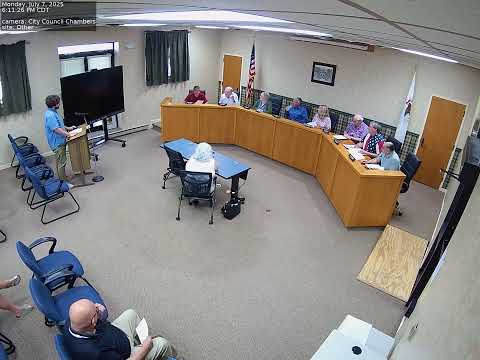
Princeton planning staff presented a first reading of proposed amendments to the municipal sign code, and councilmembers spent substantial time questioning how the rules would affect existing businesses and future entrants.
“There’s three aspects of signage,” Michael, the city’s planning and zoning officer, told the council: lowering the standard sign height to 18 feet for new signs, adding language to allow extensions for temporary informational and construction signs, and establishing monument‑sign size limits with reference to Illinois Department of Transportation visibility standards. Michael said existing signs would not be forced to change immediately; the 18‑foot limit would apply to new signs going forward.
Councilmembers raised multiple concerns. One councilmember asked, “If a building is vacated and there’s a tall sign that does not coordinate with us and a new owner comes in, is he allowed to keep that sign or does he have to change?” Michael replied that if the use ends for one year the sign generally would have to come down, but that reuse is possible if the business resumes; a replacement would be held to the new height standard.
Other councilmembers questioned whether lowering permitted height could disadvantage businesses that rely on taller pylon signs for visibility and whether limitations on LED or electronic signage might discourage certain tenants. Mayor Mabry said the intent is to improve streetscape aesthetics and reduce billboard prominence; he also noted the city currently leases a billboard and has been working toward removing it where feasible.
Council members asked staff to provide clearer language and examples about: how the code treats sandwich‑board/easel signs (a 36‑inch clear hard‑surface pedestrian path was mentioned), the enforcement timeline for signs left after businesses close, and the variance/repair process for existing electronic signs. The council agreed to advance the ordinance for additional review and a second reading so members can “chew on it” and return with suggested adjustments.
No final vote on the ordinance’s substantive provisions was taken at the first reading.