Get Full Government Meeting Transcripts, Videos, & Alerts Forever!
Get email alerts on the Tif Guiding Principles topic
No spam. Unsubscribe anytime.
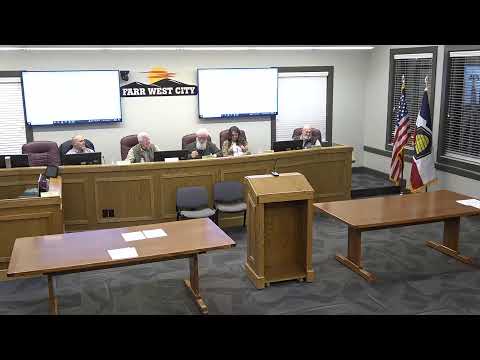
CRA adopts tax‑increment guiding principles, adds preference for public open space and trail connectivity
Summary
The Far West Community Reinvestment Agency unanimously adopted guiding principles for potential tax‑increment financing on Feb. 20, 2025. The principles set expectations: property‑tax increment only (no sales tax participation), a suggested participation rate of 50% of the increment, and a 10–12 year guidance window; the agency added explicit phr
The Far West Community Reinvestment Agency (CRA) adopted a set of tax‑increment financing (TIF) guiding principles during the city’s Feb. 20 meeting. The agency approved property‑tax increment participation (not sales tax), recommended a participation rate of roughly 50% of the increment for a 10–12 year guidance period, and explicitly tied any TIF proceeds to public infrastructure investment. The CRA also agreed to add language favoring projects that integrate public open spaces, trails and connectivity improvements.
What the principles say The guiding principles, as adopted, provide a predictable framework for developers and the city. Key elements include: - Revenue source: property tax increment only; sales tax will not be included in the participation pool. - Participation rate: a working guideline of about 50% of the incremental property tax revenue is the suggested share that would be captured in a TIF district to repay eligible public infrastructure costs. - Term: the principles suggest a limited term in the 10–12 year range for captured increments. - Eligible uses: captured funds should be applied toward public infrastructure improvements that directly support the development (streets, utilities, public parks/trails), and projects that enhance public trail connectivity or add publicly accessible open space should be considered favorably.
Why it matters Adopting guiding principles helps the CRA and city send a clear signal to potential developers about what types of public‑private partnerships the city will entertain and the baseline financial assumptions. Agency leaders said the principles are not a binding tax policy but a policy framework that reduces uncertainty for prospective partners and supports negotiations that protect public benefit.
Next steps Staff will gather infrastructure cost estimates for specific candidate projects and continue outreach. Agency members discussed regional marketing opportunities (including a regional real‑estate trade show) and asked staff to prepare the materials the county uses when marketing available parcels to retail and mixed‑use developers.
Quote Doug (economic development representative) told the agency the principles are intended to provide a transparent starting point for negotiations: "This will give developers an indication of how we think about entering into public‑private partnerships and the types of public investment we would consider."