Get Full Government Meeting Transcripts, Videos, & Alerts Forever!
Get email alerts on the Underground Storage Tank Cleanup topic
No spam. Unsubscribe anytime.
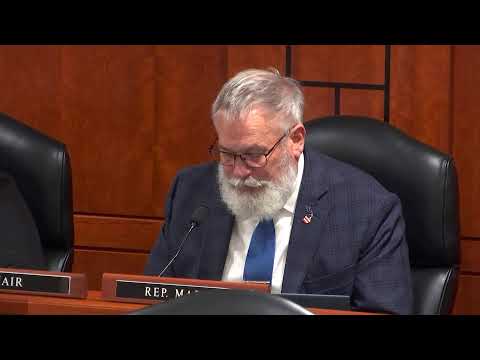
House committee advances bills to revise underground storage tank cleanup fund, raise admin cap
Summary
Representatives advanced two bills that would change how Michigan's underground storage tank (UST) cleanup fund is administered and who qualifies to make claims.
Representatives advanced two bills that would change how Michigan's underground storage tank (UST) cleanup fund is administered and who qualifies to make claims.
Chair Martin and Representative Pawlotsky's package, taken up together as House Bill 4940 and House Bill 5115, would separate claim and invoice requirements, formalize eligibility for federally recognized tribes, increase the administrative cap on the fund from 7% to 12%, and set a sunset for a legacy-release reimbursement program for releases occurring before Dec. 30, 2014.
The committee adopted sponsor substitutes and recorded roll-call approvals on the procedural motions to adopt substitutes. Representative Vanderwall moved to adopt the H-2 substitute for HB 4940 and the H-1 substitute for HB 5115; the clerk recorded roll calls that resulted in unanimous or near-unanimous support at each step.
Industry and agency witnesses urged the committee to approve the changes. Mark Griffin, representing the Michigan Petroleum Association and the Michigan Association of Convenience Stores, said the program has been effective and urged passage. "Cleaning up underground storage tanks, I always argue, is the best cleanup program the state of Michigan has ever had, and no one knows about it. We've cleaned up 18,000 sites," Griffin said.
Dylan Gephart, legislative liaison for the Department of Environment, Great Lakes and Energy (EGLE), described the bills as technical and operational updates. He told the committee the bills will "clarify the processes for submitting claims and invoices to the UST cleanup fund," establish tribal eligibility, increase the administrative cap from 7% to 12%, and provide a sunset for the legacy release program.
Committee members asked about the reason for increasing the cap. Witnesses said the change responds to administrative workload, staffing needs and invoice-processing delays caused by the prior cap. According to testimony, the refined petroleum fund generates about $58,000,000 annually; witnesses described allocations from that revenue stream to several programs administered by state agencies, but precise statutory line-item breakdowns were discussed as technical details best addressed by agency staff.
The committee heard from Bob Reisner, identified as the program administrator for the Michigan Underground Storage Tank Authority, and Paul McDonald, finance division director at EGLE, who responded to implementation questions.
No public comment cards were filed for this item, and staff indicated stakeholders would be available for follow-up technical questions. The committee scheduled another meeting for Nov. 12 and adjourned.
Votes at a glance: committee adopted sponsor substitutes and recorded roll-call approvals on adoption and reporting motions for both HB 4940 and HB 5115 (committee roll calls recorded in the transcript showing the motions prevailed with recorded yays and no nays).