Tulsa tourism group urges higher hotel tax to fund tourism marketing and venue investments
Loading...
Summary
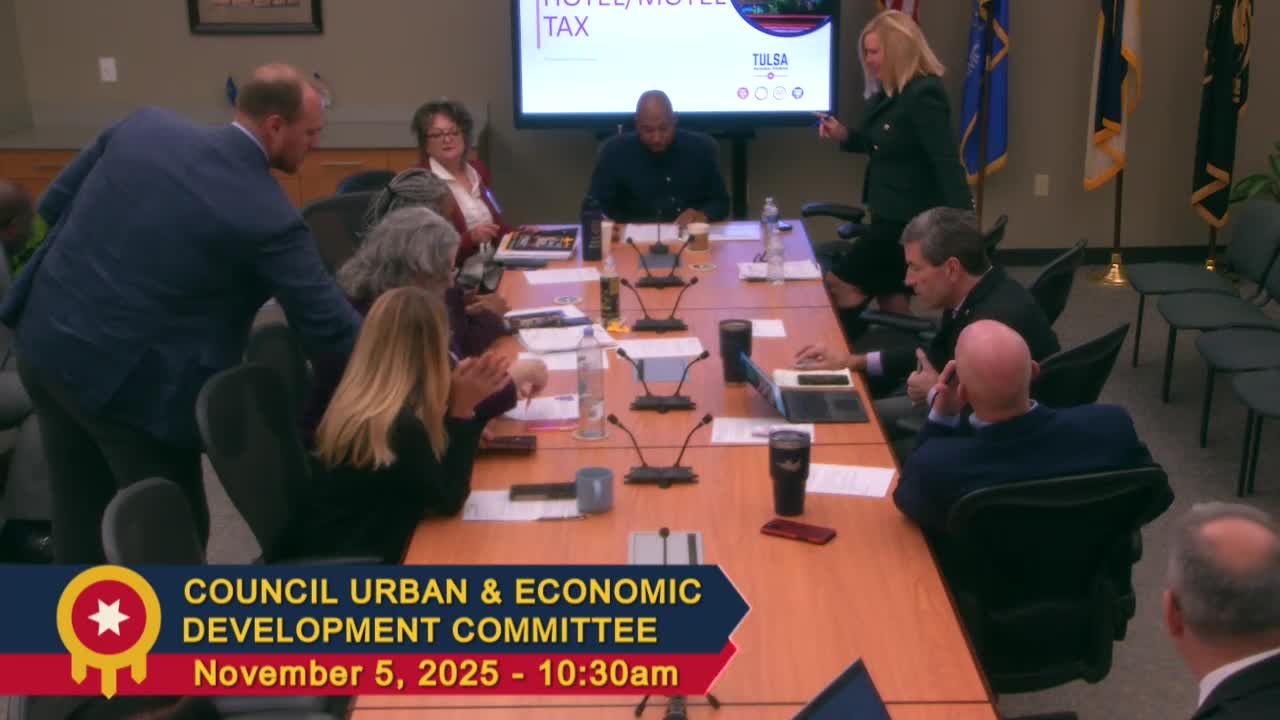
Representatives from the Tulsa Regional Chamber and Visit Tulsa told the City Council Nov. 5 that raising the lodging tax would generate millions in marketing and venue funds and help Tulsa compete for larger conventions.
Representatives from the Tulsa Regional Chamber and Visit Tulsa told the council Nov. 5 that raising the city lodging (hotel/motel) tax would increase marketing and venue investment dollars and help Tulsa capture larger conventions and events.
"If we end up raising our lodging tax, I fully anticipate our TID coming into question," the chamber representative said, referring to the tourism improvement district arrangements that currently fund event incentives. The presenter gave an example that moving the city lodging rate to 9.25% would generate roughly $3.8 million more annually for tourism uses than current collections.
The presenter argued higher lodging revenue would let Tulsa bid for more conventions and better finance facility investments. "Oklahoma City... raised their hotel tax to 9.25. It took them from a $6.5 million budget to a $27 million budget," she said, noting the larger pool enabled new capital priorities in that market.
Councilors and the presenter also discussed equity and timing: staffing capacity at Visit Tulsa is small (the presenter said the office has 14 staff versus 35 in Oklahoma City and larger teams in peer metros), and many of Tulsa’s new event opportunities — NCAA events, the Route 66 centennial and other large meetings — will benefit from revenue in place well before the events occur. Pass-through and opt-in arrangements for the existing TID would also need review.
What’s next: Chamber staff said the earliest collections from a successful vote would begin roughly 60 days after a ballot measure takes effect, so timing relative to upcoming events matters. No action was taken; the meeting served as a presentation and discussion.
Why it matters: Lodging-tax revenue is largely paid by visitors, not residents, and is the principal local tool to fund marketing and convention-venue competitiveness; a rate increase would shift the city’s ability to recruit and host large-scale tourism and convention business.
Attribution: Presentation and Q&A were on the record Nov. 5 with Visit Tulsa/Chamber representatives and councilors.