Get AI Briefings, Transcripts & Alerts on Local & National Government Meetings — Forever.
Union leaders and economic developers back Hermantown data center as nearby residents raise transparency and noise concerns
Loading...
Summary
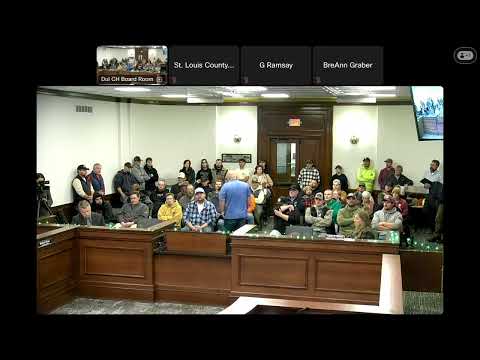
St. Louis County held a public listening session before its regular meeting where supporters and opponents of a proposed Hermantown data center spoke for and against the project.
St. Louis County held a public listening session before its regular meeting where supporters and opponents of a proposed Hermantown data center spoke for and against the project.
Several union leaders and regional economic-development advocates urged commissioners to advance the project as an economic opportunity. Kyle Bukovich, president of IBW Local 2 42, said, "This project represents represents more than just another building going up. It's a gateway to the future for regional economy and local workforce." Donald Smith, business manager of IBW Local 2 42, told commissioners that the county had "conducted environmental reviews, evaluating infrastructure needs," and defended the process while noting that large investments often require confidentiality early on.
Supporters emphasized local jobs and training. Jack Carlson, president of the Duluth Building and Construction Trades Council, said responsible development and the commission's processes have benefited members and the region. Jeremy Lambert, vice president of the Ironworkers, offered brief support for the commissioners and the project.
Opponents and nearby residents voiced concerns about transparency, construction impacts and future project phases. Emma Rickman, who said she lives about 2.5 miles from the proposed site, said the potential "full build out for this proposed data center would take 8 to 10 years" and described anxiety from past clearing and construction noise near her home. She criticized the use of NDAs and said, "NDAs are not in the interest of democracy."
Multiple speakers described the use of NDAs during early site discussions. Supporters framed NDAs as a standard business practice that protects potential investment until public review can begin; critics said NDAs reduced public trust and limited transparency. Jonathan Thornton, a Hermantown resident, argued that normalizing NDAs "does not mean it's right," and emphasized that transparency is a foundation of trust.
Rachel Johnson, president and CEO of Apex, described the organization as a private-sector economic-development partner and said the region must "embrace the technological transformation" and support infrastructure and workforce investments that follow. Supporters also highlighted environmental design features discussed for the project; Donald Smith mentioned closed-loop cooling systems as an example of an effort to conserve water.
No formal motions, votes, or board decisions on the data-center proposal were recorded during the public listening session portion of the transcript. County staff and the chair limited the session to a set speaking period, reminded attendees to sign up, and asked commenters to address the full board rather than individual commissioners.
The comments at the session brought contrasting priorities into relief: labor and business representatives focused on jobs and regional competitiveness, while nearby residents and other community members asked for more public disclosure about NDAs, the AUAR referenced by a speaker, construction noise and the scope and timeline of future phases.