Get Full Government Meeting Transcripts, Videos, & Alerts Forever!
Get email alerts on the Literacy Dyslexia topic
No spam. Unsubscribe anytime.
New Dyslexia Den seeks $4,404 to cover facility rent for structured‑literacy tutoring
Summary
The Dyslexia Den described a Wilson Reading System‑based tutoring program for students with decoding deficits and requested $4,404 to cover a year of rent at the Shaw Cultural Center. The presenter described assessment, small‑group instruction and sliding‑scale session fees and noted availability of third‑party scholarships (ACE, John Peterson).
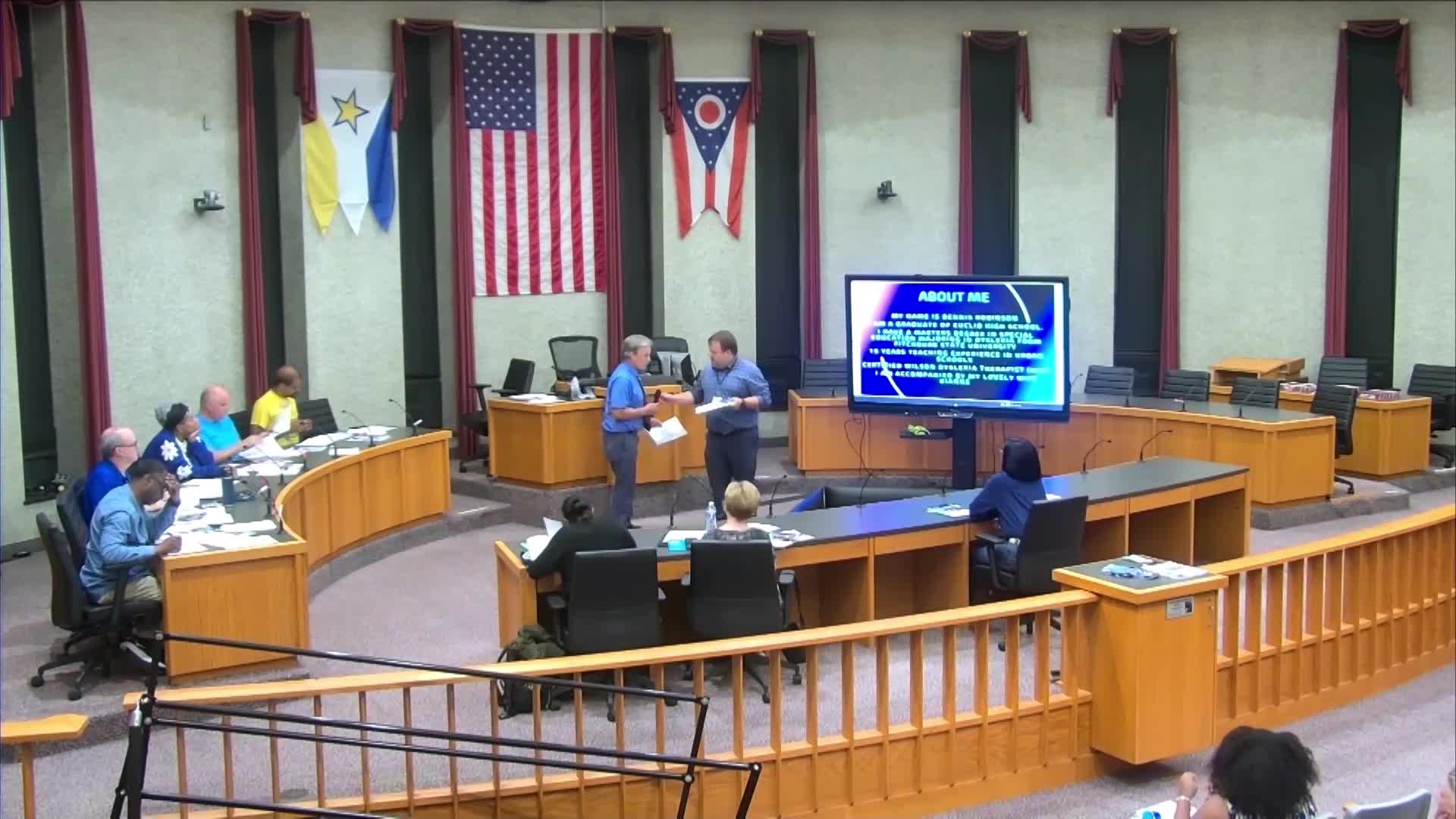
Dennis Robinson, founder of Dyslexia Den and a certified Wilson dyslexia practitioner, asked the advisory committee to cover facility rent at the Shaw Cultural Center (the center charges $367 per month, $4,404 annually) so the nonprofit can expand small‑group structured‑literacy tutoring in Euclid.
Robinson described the Dyslexia Den model as Wilson Reading System‑based structured literacy for students with word‑level deficits (grades 2–12 and adults). He described recommended dosage (minimum two completed lessons per week; three sessions weekly preferred) delivered in small, homogeneous groups of up to four students or one‑on‑one instruction. He noted the program uses the Wilson decoding/encoding assessment to place students and measure progress.
Robinson provided a sliding fee schedule: for households under $60,000 per year, sessions are presented at $10 per session (assessment week fee noted); for higher incomes the presenter listed $65 per session; a higher tier (tier 3) was listed at $105 per session. He said some families received support from ACE (after‑school child enrichment) and John Peterson scholarship funds to cover fees.
Robinson said the Dyslexia Den is a new applicant for program year 2026 and that last year the program did not fully cover expenses; with the requested rent support he expects the nonprofit can reach break‑even and expand services. Committee members asked about residency verification, income eligibility and assessment measures; staff noted that awardees receiving federal funds must document national objective (low‑to‑moderate income clientele) and that technical assistance would be available for federal compliance if the applicant is funded.