Get Full Government Meeting Transcripts, Videos, & Alerts Forever!
Get email alerts on the Senior Services topic
No spam. Unsubscribe anytime.
Euclid Senior Programs seeks $176,793.49 in CDBG support to sustain meals and transportation
Summary
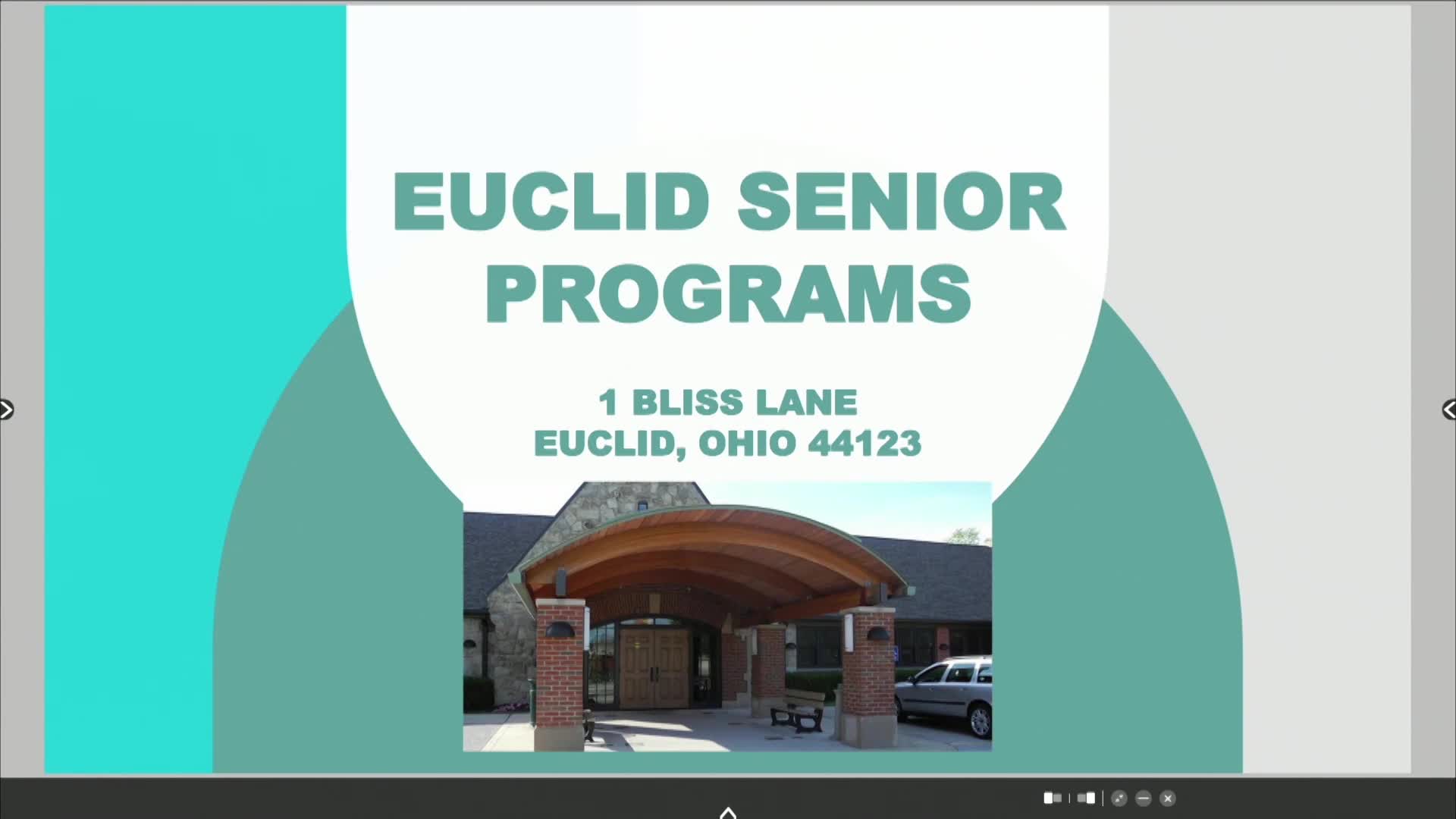
Euclid Senior Programs asked the Citizens Advisory Committee to approve $176,793.49 in Community Development Block Grant funds to sustain its meal and transportation services for older residents.
Euclid Senior Programs asked the Citizens Advisory Committee to approve a CDBG allocation of $176,793.49 to sustain its transportation and meal operations that serve older residents of Euclid.
Cassandra Bronson, manager of Euclid Senior Programs, told the committee the center operates Monday through Friday and serves people 55 and older for activities and 60 and older for meals and transportation. "We are a community altogether that they can depend on," Bronson said, describing congregate lunches, field trips, exercise classes, health education and a home‑delivered meal service for the frailest residents.
Bronson provided monthly and year‑to‑date usage: as of July 31 the program had completed 3,407 transportation trips and produced 19,156 meals year‑to‑date (about 10,000 home‑delivered meals and 9,016 congregate meals). She said roughly 80 seniors eat the congregate lunch daily and roughly 100 receive home‑delivered meals. The center reports more than 1,200 members and estimates about 66% of participants are Euclid residents. Membership is $10 a year.
The funding request would cover payroll costs tied directly to delivery of the meal and transportation services: two full‑time drivers, four part‑time drivers and two part‑time kitchen aides, plus related personnel costs. Bronson said her staff includes a nutrition supervisor, program coordinator, administrative assistant, receptionist and drivers; the social worker position is currently vacant. She said the transportation fleet is handled by six drivers and that vehicle maintenance and some categories were noted as ineligible for CDBG support by staff during committee questioning.
Committee members asked specific eligibility questions. Ed Chenock, Euclid Community Development Manager, reminded presenters that HUD and CDBG rules can classify some activity—such as leisure field trips—as ‘‘entertainment’’ and therefore potentially ineligible; he advised the senior center to prioritize medically‑necessary and essential transportation and grocery/banking trips when designing a CDBG‑funded service component.
Bronson said the demand for services has risen amid federal benefit renewals and local cost pressures; she said the center capped home‑delivered meals at just under 100 households because driver capacity limits service. She said CDBG funds in recent years covered partial salary for drivers, a nutrition supervisor and some kitchen services, and that the 2026 request reflects salary increases and a desire to add kitchen aide support to maintain licensing and sanitation standards.
If funded, the allocation would be used for ongoing operations rather than capital purchases. Bronson invited committee members to visit the center and observe daily operations and noted that many clients receive vital social contact through the lunch program in addition to nutrition and transportation.