Get Full Government Meeting Transcripts, Videos, & Alerts Forever!
Get email alerts on the Social Services topic
No spam. Unsubscribe anytime.
Manassas Department of Social Services reports declines in poverty rate, expands opioid and housing programs
Summary
City Social Services reported reduced poverty metrics, nearly 11,119 families served in the past year, expansion of opioid-abatement work and juvenile prevention partnerships, and a marked increase in housing-assistance caseloads and rental payments to landlords.
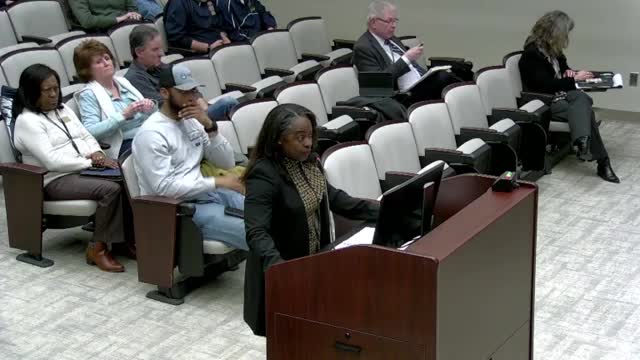
Nicole Kirvin, director of the Manassas Department of Social Services, told the City Council on Feb. 24 that her department assisted 11,119 families last year and saw a modest reduction in the share of residents classified as ALICE (asset-limited, income-constrained, employed).
Kirvin said the department served a monthly average of 328 households for housing assistance, an increase she attributed to reductions in the voucher waitlist and expanded outreach. She told council that about $4.5 million in rental assistance was paid directly to landlords in the last fiscal year to maintain housing stability for residents.
The report laid out recent program changes and new grants. The department added two fully funded positions without city-general-fund increases and reinstated an internship program with George Mason University to expand workforce capacity. Kirvin described a new opioid-abatement initiative that coordinates Manassas Police and Fire & Rescue data with juvenile justice and community-service partners to reach at-risk youth and provide earlier interventions. She also cited the department’s use of Virginia Juvenile Community Crime Control Act (VJCCCA) funding and an “E-3” partnership with police as ways to intervene before substance misuse escalates.
Kirvin presented data showing a reduction in the ALICE population from 47% the prior year to 41%, and noted Medicaid remains the dominant safety-net program: about 97% of public-assistance recipients were enrolled in Medicaid; SNAP, TANF and other programs make up the remainder. She said child-care assistance increased substantially, with 412 children served and roughly $700,000 in child-care funding brought into the city for those services.
Council members pressed staff on several details: how the SNAP increase aligns with post-pandemic policy changes, the composition and source of the $4.5 million in landlord payments (Kirvin said payments are direct rent subsidies paid on behalf of eligible households), and the current housing-voucher waitlist estimate (Kirvin said the waitlist had fallen from roughly 2,000 to $3.75 — presented as a waitlist figure expressed in thousands on department slides and discussed as a significant reduction). Kirvin cautioned that HUD guidance had placed some housing actions on pause, limiting immediate movement of additional vouchers.
Kirvin urged residents to consider foster-care training and shared a QR code for prospective foster parents. She closed by emphasizing the department’s community outreach activities—Narcan trainings with Fire & Rescue, pop-up awareness events with the library, and an elder-resource fair—and noted that alternative community funding of roughly $205,000 had been maximized to help cover local needs without relying solely on federal dollars.
Council acknowledged the report and thanked social-services staff for expanded hours and weekend response capacity.