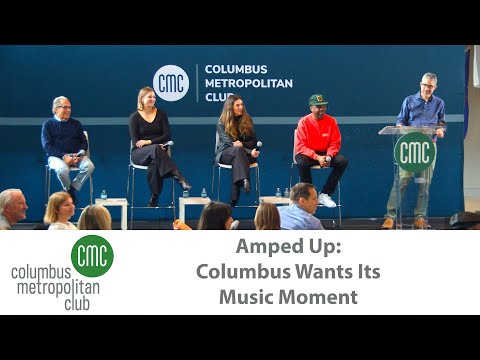
Columbus panel urges public-private investment, mid-sized venues and protections to grow city’s music economy
Loading...
Summary
COLUMBUS, Ohio — Leaders from Music Columbus, venues and music businesses told a Columbus Metropolitan Club forum Nov. 5 that the city has the creative talent and economic footprint to grow a larger music industry — if public, business and philanthropic leaders invest in infrastructure, venues, promotion and workforce supports.
COLUMBUS, Ohio — Leaders from Music Columbus, venues and music businesses told a Columbus Metropolitan Club forum Nov. 5 that the city has the creative talent and economic footprint to grow a larger music industry — if public, business and philanthropic leaders invest in infrastructure, venues, promotion and workforce supports.
Panelists noted a recent industry estimate that music activity in the region produces about $1,300,000,000 in economic impact and argued the city currently lacks components of a full music industry, such as active major managers, publishing companies and locally based labels. Chris Deville, managing editor of Stereogum and the forum’s moderator, framed the conversation around the question of “how to elevate the city’s music community to the next level.”
Tom Krauss of Music Columbus outlined current nonprofit efforts that aim to build that foundation. ‘‘We have a music incubator program where over a five‑month period artists learn about legal issues, finance, branding and leave with recordings and branding packages,’’ he said, describing programs that also include an instrument drive and a paid performance program for emerging artists.
Panelists identified several specific gaps. They said Columbus has plentiful small clubs and several large arenas but lacks consistent mid‑sized or outdoor amphitheater capacity in the roughly 10,000–12,000 range that attracts mid‑tier national touring acts and larger festivals. One panelist cited publicly available venue data that only about 20% of independent venues in Ohio were profitable last year, a figure panelists said underlines a need for audience development and policy measures to prevent displacement of independent venues.
Funding and direct support for musicians emerged repeatedly. Panelists proposed a mix of public and private investments, including targeted funds to cover production costs and stipends for working musicians, pointing to international examples of monthly musician stipends as a model. An audience question raised how the city’s ticket fee is currently distributed; a panelist said that fee flows to the Greater Columbus Arts Council (GCAC) and that discussions are ongoing about whether distribution could better support for‑profit venues and nonprofit organizations that produce music programming.
Other recommendations included stronger marketing and export strategies — more signature festivals or broadcast programs that create a national trail back to Columbus — and improved public transit so workers and audiences can reliably reach evening events. Panelists also urged protections for venues in developing entertainment districts so rising property values and gentrification do not force them out.
The forum closed with Sofia Pfiffner, president and CEO of the Columbus Metropolitan Club, urging individuals and institutions to support local artists. ‘‘We have a choice in shaping the culture that we want,’’ Pfiffner said, adding that civic leaders and private partners must decide whether to prioritize music as part of the city’s quality of life and economic development strategy.
Absent from the discussion were formal proposals or votes; the session was a convening to identify priorities and possible funding and policy approaches rather than the adoption of specific legislation or city action items.