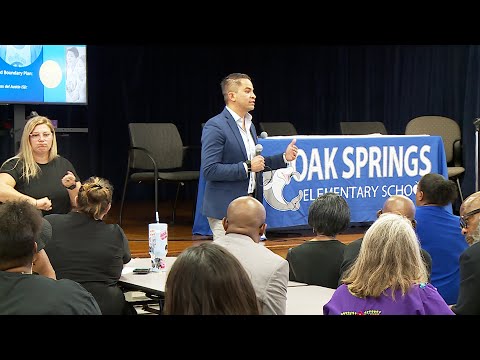
Austin ISD Faces Community Pushback as Draft Plan Would Realign Oak Springs and Nearby Elementary
Loading...
Summary
Austin Independent School District Superintendent Matías Segura told East Austin families that a draft consolidation plan is intended to address long-standing enrollment and resource imbalances and to avoid state intervention.
Austin Independent School District Superintendent Matías Segura told East Austin families that a draft consolidation plan is intended to address long-standing enrollment and resource imbalances and to avoid state intervention.
"Hay un plan en borrador...para la mayoría de las escuelas del distrito quiero que sepan que nosotros no estamos asegurando que todos los estudiantes estén recibiendo lo que tienen que recibir," Segura said, describing what he called decades of unmet needs for Black and Latino students and the district’s efforts to alter feeder patterns, transfer policies and campus resources.
Why it matters: The district said it has roughly 116 schools and about 70,000 students, with an estimated surplus of about 20,000 seats spread across the city. Officials told parents that continued low enrollment and the Texas Education Agency (TEA) accountability rules place schools at risk of state-directed changes; the district must post a recommended plan by mid-November and finalize elements required by the state by Nov. 20 (the district referenced Nov. 20/21 as the state deadline).
What the district presented: Segura listed five priority areas the administration is pursuing simultaneously: align feeder patterns to create coherent school pathways, revise transfer policies that shift enrollment away from neighborhood schools, reduce a persistent budget deficit, respond to TEA accountability constraints and preserve program continuity (including dual-language and Montessori programs).
Community response: Dozens of parents and community members said they support investments in Oak Springs and want transplanting students, programs and staff to happen without erasing the school’s role as a neighborhood hub. A parent who identified herself as Victoria, a member of Oak Springs’ site advisory group, said, "Nuestra escuela es segura para los estudiantes," calling for safe crossings and local supports if any transitions occur. Other speakers described the school as a second home for families, cited small class sizes and expressed fear that consolidation would break longstanding community ties.
Staffing and transition plans: District staff said hiring preferences and fairs are planned so current employees are prioritized where possible; the district indicated it will avoid external hires until April and aims to place teachers during the spring semester with adjustments over the following summer. Officials said transition planning will include transportation options and mental-health supports tailored to affected students.
State timeline and limits: District leaders repeatedly cited a TEA-driven timeline that limits how long the district can delay a recommended plan. Segura said the accountability framework is "too rigid" and that without a locally acceptable plan the state could increase intervention; he framed the district’s effort as an attempt to keep locally elected leaders in charge.
Requests from families: Parents pressed for specific commitments on transportation, program continuity, safety at intersections and investments in campus maintenance rather than moving resources away from the neighborhood. Community organizers described local efforts to convene 20–30 residents to advocate for joint planning between the two campuses and asked for transparent, translated documents and additional meetings.
No formal action at this meeting: Staff and trustees did not take votes during the session. The district confirmed it expects to post recommendations, translate materials, continue community meetings (including at the neighboring campus) and submit the items required by TEA by the stated mid-November deadline.
The next steps: District staff said they will continue outreach meetings, collect comment cards and incorporate community feedback into the material the board will consider before the district posts the finalized recommendations. The superintendent and staff remained after the meeting to answer additional questions.