Get Full Government Meeting Transcripts, Videos, & Alerts Forever!
Get email alerts on the Assessment topic
No spam. Unsubscribe anytime.
District reports rising graduation rates and midyear gains on I-Ready diagnostics; staff emphasize continued work in math
Summary
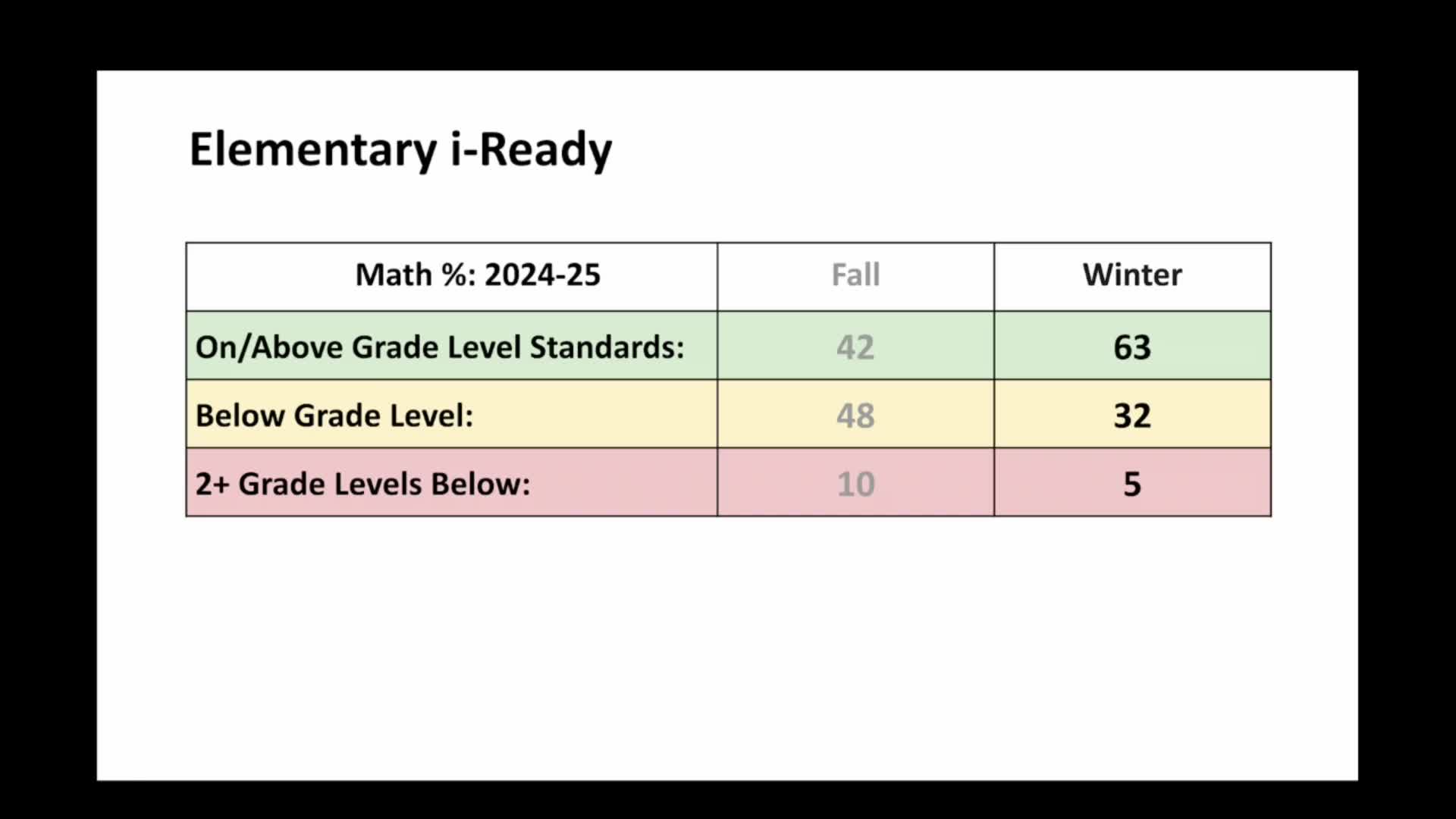
District staff presented three-year graduation-rate trends and midyear I-Ready diagnostic results showing fall-to-winter gains in reading and smaller, improving gains in math. Staff noted last-year cohort composition changes and described instructional steps to sustain progress.
District staff presented education-performance data to the board on Feb. 24, reporting that three-year graduation-rate trends improved for the class cohort that includes the 2024 graduates, and that midyear I-Ready diagnostic results show gains from fall to winter across elementary grades.
Staff cautioned that the statewide cohort measure can be affected by students served in residential or alternative programs included in district counts; the presenter noted that Parrot Creek students were included in the most recent cohort, which affected comparisons with prior years. When district-only high-school counts are considered, the two comprehensive high schools showed higher graduation rates than the aggregated cohort that included other programs.
At the elementary level, staff shared I-Ready fall-to-winter results and emphasized that diagnostic results report student performance against end-of-year standards on the day of the assessment; teachers and principals use those diagnostics to tailor instruction. District leaders said reading scores showed stronger midyear progress and that math, now in its second year on the I-Ready classroom mathematics program, showed more modest winter gains but is supported by new curriculum, classroom strategies for conceptual understanding, and teacher professional development.
Superintendent Sheehy and instruction staff described local interventions, academic support centers and targeted supports for students with IEPs and English learners, and said school-by-school plans are guided by principal-level goals tied to state assessments. The board heard the data as part of regular monitoring and asked staff to continue providing updates as spring diagnostic and state assessment results become available.