
Parents urge Downingtown board to review East Ward boundary that splits small neighborhoods
Get AI-powered insights, summaries, and transcripts
Subscribe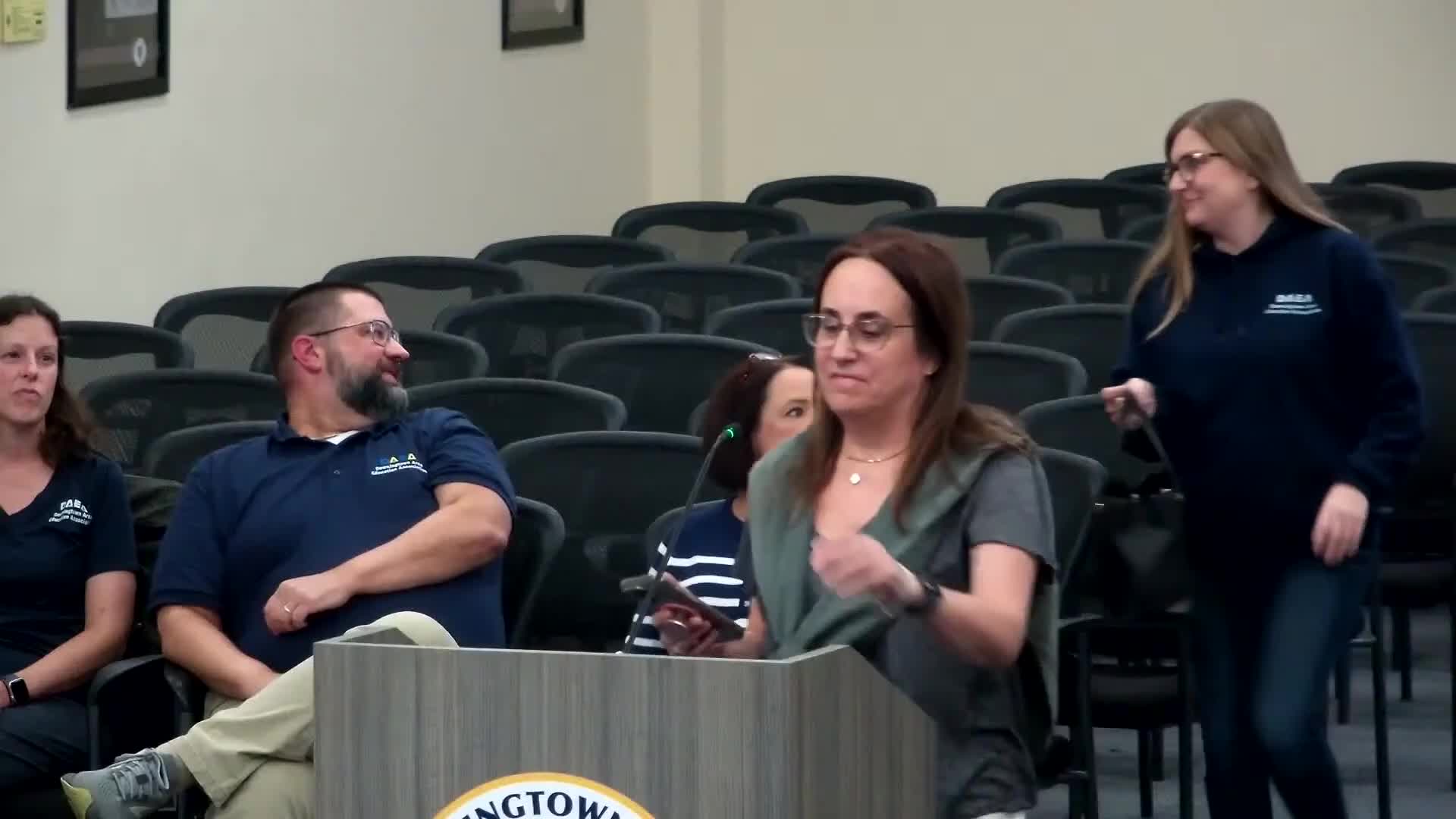
Summary
Multiple parents and residents asked the Downingtown Area School Board to place the East/West split affecting portions of East Ward (Williamsburg, Norwood House Road) on the board’s agenda for review, saying the boundary sends about 15 students per grade away from their natural cohort, harms social connections and raises equity concerns.
Several parents and residents used public comment time to ask the Downingtown Area School Board to revisit a boundary that divides small portions of East Ward and sends a minority of students to Downingtown West.
Gina Ziak said the Williamsburg and Norwood House Road neighborhoods were split out more than a decade ago to ease overcrowding; she said enrollment and building capacity have since changed. “This boundary separates a very small group of children, about 15 of the 112 in this year's fifth grade class in East Ward,” Ziak said. She asked the board to place the boundary issue on next week’s agenda so the full board can consider the impact.
Nicole Patton described the split as a form of exclusion that separates children who have grown up and learned together. “These children will have grown up together. They've learned side by side, celebrated birthdays, and built friendships that make school feel like home. They're being told those friendships will be split apart once they reach middle school,” Patton said, and she asked the board to “please reconsider, find a solution that keeps our children together, or at least acknowledge the emotional impact.”
Chris Patton cited district information showing seven of 10 elementary schools keep cohorts intact through middle and high school; East Ward, Shamona Creek and Springton Manor divide cohorts. He said roughly 22% of East Ward students attend Downingtown West while 78% remain on the East track, and argued the small group experiencing separation should not be excluded from their peer networks.
Ian Throne and other parents raised extracurricular and athletic impacts, saying children separated by the boundary miss opportunities to participate on teams and in district events with friends they have known since elementary school. Amanda Schwayge, a parent and educator, asked the board to consider special‑needs impacts; she said one of her children is autistic and that the split could make social transitions harder.
Multiple speakers requested that the board add the boundary review to an upcoming agenda so the full board can examine enrollment data, neighborhood changes and possible redistricting solutions.
The transcript records the public‑comment requests but does not include a board vote or formal direction to staff to place the item on next week’s agenda during this meeting.