Get Full Government Meeting Transcripts, Videos, & Alerts Forever!
Get email alerts on the Transportation topic
No spam. Unsubscribe anytime.
Peculiar council tables ordinance to allow street use of certain golf carts after safety debate
Summary
After extended debate on safety, equipment requirements and enforcement, the Peculiar City Council voted 4–2 to table Bill 2025-17, a proposed ordinance to permit specified golf carts on city streets. Councilmembers asked staff to return with clearer equipment standards and enforcement provisions within months.
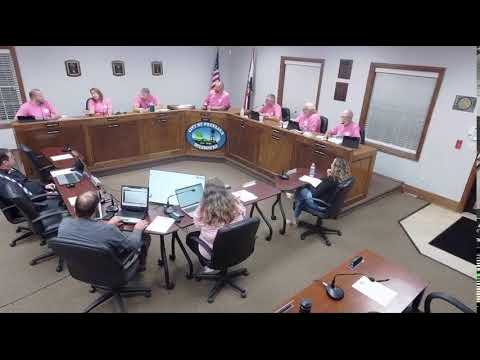
The Peculiar City Council on second reading tabled an ordinance that would amend Chapter 340 of the city code to permit certain golf carts to operate on city streets.
Alderman Jarrett brought Bill 2025-17 to the floor for second reading and council members debated safety, vehicle classifications and enforcement. Speakers contrasted older low-speed golf carts with newer street-legal models that can reach up to 35 miles per hour and noted the city already allows certain motorized bicycles and mopeds under state law.
Council members raised specific concerns about speed differentials on arterial roads, required equipment such as headlights, taillights, seat belts and turn signals, and the city’s capacity to inspect vehicles. One speaker noted the draft code language did not explicitly include turn signals. Others argued that allowing low-speed carts on roads with 35 mph limits could encourage risky passing and traffic conflicts.
City staff explained the ordinance would require a permit and that vehicles not meeting the code’s equipment requirements would not be issued tags; members questioned how the city would verify compliance without an inspection program in place. The role of homeowners’ associations also arose; staff said an HOA cannot authorize use on city-owned streets without city approval.
A motion to table the ordinance until staff could return with more detailed equipment, speed and enforcement provisions — with a suggested review period of about six months — passed on a roll-call vote, 4–2.
Council members who voted Aye were Alderman Earhart, Alderman Gallagher, Alderman Poland and Alderman Wells. Alderman Grunwald and Alderman Jarrett voted No. The motion’s mover and seconder were not specified in the public record.