Get Full Government Meeting Transcripts, Videos, & Alerts Forever!
Get email alerts on the Budget Overview topic
No spam. Unsubscribe anytime.
Charlotte warns FY2026 will be tight; pay‑plan gap estimated $16.5M–$22M
Summary
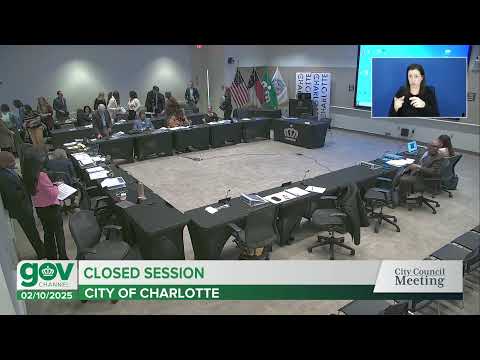
Charlotte City Council convened a workshop March 10 to discuss FY2026 budget development and was told that personnel costs dominate the general fund and that a pay plan will create a multi‑million dollar funding gap.
Charlotte City Council convened a workshop March 10 to discuss FY2026 budget development and was told that personnel costs dominate the general fund and that a pay plan will create a multi‑million dollar funding gap. "The general fund is balanced but for a pay plan," Marie of the budget and finance team told the council, adding the city currently projects about a $500,000 surplus before a pay plan is added.
City staff said personnel costs represent 73% of the general fund and that public safety accounts for the majority of those personnel costs. "73% of the personnel costs are in police and fire," Marie said, noting recent compensation investments and expanded staffing have reduced vacancies. Staff summarized that, with a typical pay plan layered on current expenditures, the gap is about $16.5 million; with a more enhanced pay plan it could be closer to $22 million. Ethan Smith, strategy and budget manager, said the administration believes roughly one‑third of that gap has been addressed through a combination of revenue and expenditure strategies already under review.
The nut of the issue is that much of the general fund is recurring personnel costs and that revenue sources do not automatically track those costs: staff highlighted that property tax growth is limited to new construction between revaluations while sales tax and other revenues are more sensitive to economic conditions. Dr. Tazifor, presenting an economic outlook, said the Charlotte MSA grew about 4.7% in 2023 and that staff project roughly 3.5% sales‑tax growth for the near term, but flagged inflation, tariffs and construction trends as risks to revenue forecasts.
Staff outlined several approaches to close the remaining pay‑plan gap: targeted compensation changes (minimum wage boosts, step adjustments for public safety, recruitment incentives), increased cost recovery for services, internal "team of teams" budgeting to reallocate funds to core services, ERP‑driven processing efficiencies, and exploration of automation and AI to reduce operating costs. Marie also noted one‑time revenue and vacancy savings have partially mitigated budget pressure in the current year but cautioned those are not reliable long‑term fixes.
Councilmembers asked for more detail on the base assumptions behind expenditure growth, the timing of recruit classes and whether the draft budget presumes new sworn positions. City Manager Jones said the proposed FY2026 planning approach would not preclude recruit classes and discussed the common practice of "over hires" to bridge attrition and training timelines. Councilmember Driggs urged staff to spell out the growth assumptions and cautioned that property revaluation methods can erode purchasing power if inflation is not otherwise matched by revenue growth.
Ending: Staff scheduled further briefings and committee review: enterprise funds will go to committee and the next full budget workshop is set for March 24, where capital projects and solid waste financing will be discussed. Councilmembers were encouraged to begin substantive budget work early to allow meaningful policy decisions before late‑cycle changes.