Get Full Government Meeting Transcripts, Videos, & Alerts Forever!
Get email alerts on the Municipal Finance topic
No spam. Unsubscribe anytime.
Miramar votes to move residential curbside solid‑waste charge to property tax roll, effective Nov. 2026
Summary
The Miramar City Commission on Nov. 5 voted to shift residential curbside solid‑waste billing from the monthly utility invoice to a non‑ad valorem assessment on the property tax roll, to take effect with tax bills issued in November 2026.
The Miramar City Commission on Nov. 5 voted to shift residential curbside solid‑waste billing from the monthly utility bill to a non‑ad valorem assessment on the annual property tax roll, with an expected implementation date of November 2026.
Solid‑waste manager Ralph Trapani told commissioners that the change would not create a new fee or increase the city’s millage rate. “This does not increase our taxes. Our millage rate will not be increased,” Trapani said. Staff said the city’s current collection rate for solid‑waste charges billed on the utility invoice is about 92%, and that shifting the charge to the property tax roll typically yields roughly a 96% collection rate. The Broward County property appraiser will charge a $0.50 entry fee per unit on the tax bill, which the city has planned for in its calculations.
The city described several operational implications: newly constructed homes that gain a certificate of occupancy after the tax‑roll list is created will be billed directly by the finance department until they are added to the roll; the city will develop a residential solid‑waste assessment roll in 2026; and residents on the roll will pay during the property‑tax payment window (November through March) and can take an early‑payment discount. Trapani said the change is intended to reduce delinquencies and provide a steadier revenue stream for budgeting.
Commissioners pressed staff about renter impacts and transparency. Commissioner Chambers described the move as a shift of where residents pay rather than a fee increase, calling it “right pocket, left pocket” and warning that landlords could pass the annual cost to tenants through rent adjustments. Staff said the water/utility bill will decline to the extent the sanitation line is removed, but renters should monitor itemized charges and leases for any rent pass‑through.
Vice Mayor Yvette Colburn, who asked that staff outline communications and timelines, emphasized outreach: the city will work with marketing and use city platforms (social media, Miramar TV, e‑blast, “Commission Corners”) to notify affected property owners well before the first tax bill shift in November 2026.
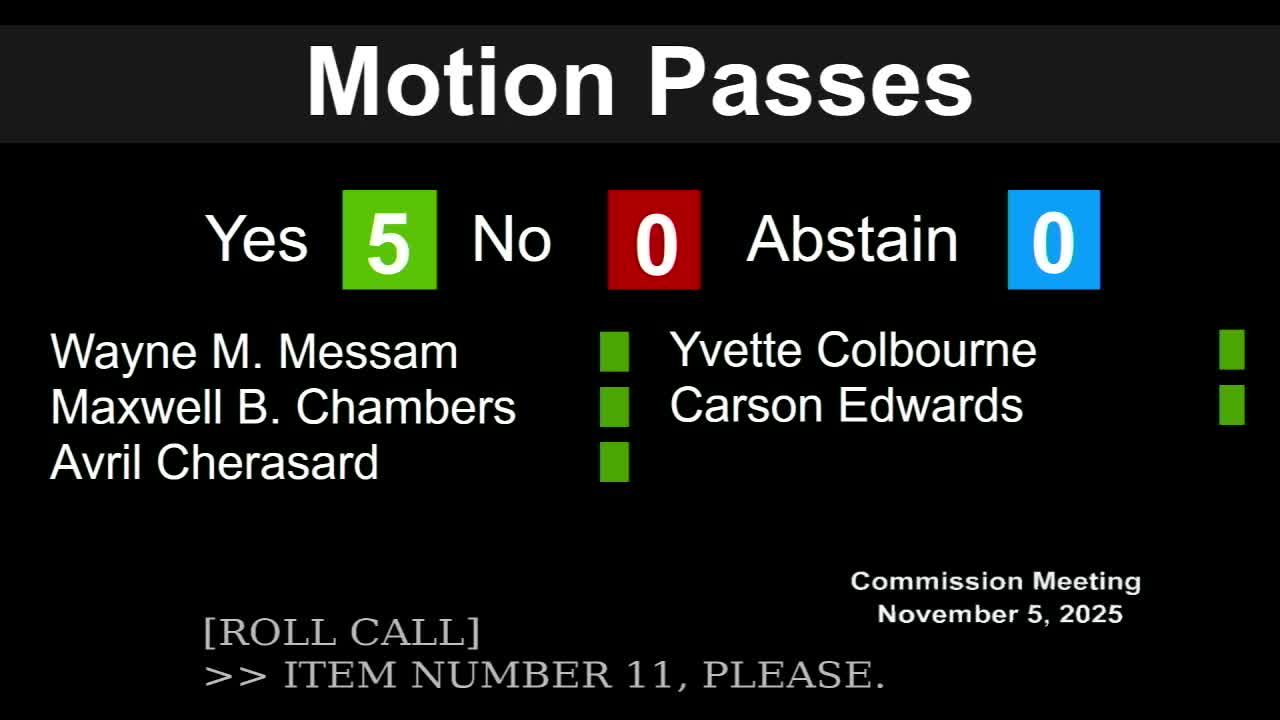
The commission recorded a unanimous vote to approve the resolution. City staff will return with the required initial assessment resolution in July 2026 and a final assessment adoption tied to the FY2027 budget in September 2026.
Key figures cited in the presentation included a current collection rate under utility billing of about 92%, an expected tax‑roll collection rate of about 96%, a monthly residential sanitation charge cited in discussion of about $34.03, and the $0.50 per‑unit entry fee charged by the property appraiser.