Public hearing draws wide testimony on proposed St. Paul ordinance restricting assault weapons in sensitive public places
Loading...
Summary
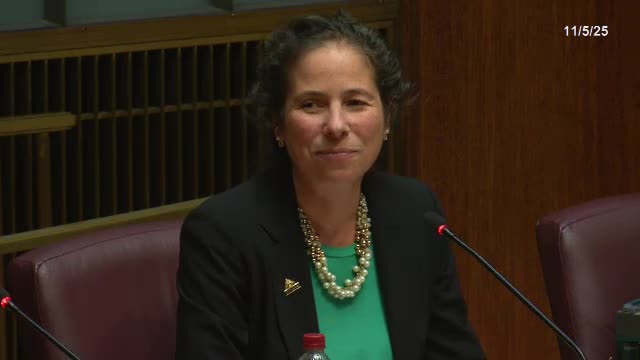
Dozens of residents, medical professionals, educators, veterans and youth gave emotional testimony at a Nov. 5 public hearing on an ordinance that would prohibit public possession of assault weapons, large‑capacity magazines and similar devices in specified public locations. The council laid the item over to Nov. 12 for final adoption.
The City Council on Nov. 5 held an extended public hearing on a proposed ordinance that would establish local regulations for assault weapons, binary triggers, ghost guns, large‑capacity magazines and signage related to those items in sensitive public locations.
More than 20 speakers testified for and against the proposal. Supporters included public‑health and child‑safety advocates, veterans and teachers who described community trauma and the effect of mass shootings: Gretchen Damon of Moms Demand Action said local leadership is necessary when state action stalls, and pediatric and emergency physicians described the catastrophic injuries caused by high‑power rifles. Several parents and teachers recounted the aftermath of the Annunciation Church and School shooting and urged local action to reduce access to military‑style rifles in public spaces.
Opponents and cautionary voices included speakers who cited state preemption and constitutional concerns, urging the council to coordinate with state lawmakers or to pursue alternative measures such as education and community programming. Legal commenters noted Minnesota statute 471.633 and warned of possible litigation if the council adopts provisions that conflict with state law; others urged the council to lead a push for state‑level change.
Council President and staff closed the hearing after receiving public testimony and laid the ordinance over for final consideration on Nov. 12, noting the breadth of testimony and the need to review legal questions and public comment.
Why this matters: the proposed ordinance addresses high‑profile public safety concerns after recent mass shootings. The hearing showed both broad public desire for action to reduce harm and clear legal/policy uncertainties that the council must weigh before final action.
What happens next: council members will review the written record, legal assessments and public testimony before voting on final adoption at the Nov. 12 meeting; staff and council indicated they will consider state preemption and enforcement questions in the interim.