Get Full Government Meeting Transcripts, Videos, & Alerts Forever!
Get email alerts on the Reparations topic
No spam. Unsubscribe anytime.
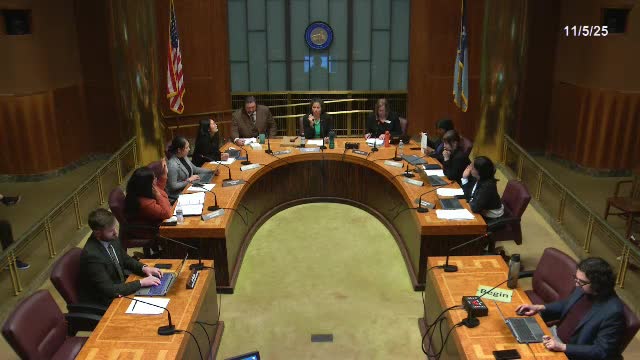
St. Paul council adopts revised process for reparations harm‑study review after dispute over RFP oversight
Summary
The St. Paul City Council on Nov. 5 approved an amended resolution clarifying oversight of the reparations harm‑study RFP review, reaffirming the Reparations Commission's role while aligning the process with city attorney and procurement guidance.
The St. Paul City Council on Nov. 5 approved an amended resolution clarifying who will lead review of proposals for the city's reparations harm study, moving to reaffirm the commission's role and to align committee membership and procedure with city attorneys and procurement staff.
Council Member Johnson, who moved the version 2 amendment, told the council she had been involved with reparations work since taking office and said the version adopted "reaffirms the authority and leadership of the reparations commission in its guiding process" while ensuring the procurement steps and legal guidance are followed. Johnson said the motion was intended "not to slow this process, but to safeguard it" and to protect the integrity of a process led by ADOS‑identifying commission members.
Opposition came from the sponsor of the earlier version (referred to in the record as version 1), who said that the earlier resolution had been guided by council and procurement attorneys and that version 1 deserved full discussion. That council member (identified in the record as Ms. Buie) pressed for a review of version 1 and said many community members and commissioners reported they had not seen or been given input into the RFP that was published in August. Director Williams (city staff) summarized the timeline: the Reparations Commission recommended funding in August 2024, the council appropriated $250,000 in December 2024, the commission drafted and voted on an RFP in mid‑2025, the RFP was published in late August and closed Oct. 3, 2025, and evaluation proceeded thereafter.
Johnson and supporters argued the record requires coordination with the commission and an annual review clause that would allow the city to assess outcomes such as calls to campus security tied to licensed events. Critics said community outreach had been inadequate and urged more transparency and time to review the RFP and related materials. After debate, council members voted to call the question and then adopted the amendment. The amendment vote carried, and the full resolution as amended was adopted by an affirmative vote of the council (the record shows the final adoption as approved by council vote). The amendment and final adoption were recorded in the meeting minutes and the matter will proceed under the revised terms approved by the council.
Why this matters: the reparations commission is an 11‑member body appointed by the council whose work is intended to produce a community‑driven harm study and recommendations. The debate exposed competing views about procurement timelines, community outreach, and the appropriate role of the council versus the commission in managing vendor selection. Supporters said version 2 protects the process and the commission's mandate; opponents urged additional outreach and review to ensure those historically affected by the harms are fully engaged.
What happens next: the adopted resolution directs the RFP review to proceed within the parameters set by city procurement and the Reparations Commission's framework. Any future disputes about outreach, vendor selection or timelines will appear in subsequent council records and staff updates.