Yukon clears interlocal agreement with Oklahoma City that removes sales-tax sharing, narrows retail rights
Loading...
Summary
The Yukon City Council voted unanimously Nov. 4 to approve a 2025 interlocal agreement with Oklahoma City and the Oklahoma City Economic Development Trust that removes prior sales-tax-sharing requirements for multiple parcels and codifies a restriction on large retail power centers.
The Yukon City Council voted unanimously Nov. 4 to approve a 2025 interlocal agreement among the city of Yukon, the Yukon Municipal Authority, the city of Oklahoma City and the Oklahoma City Economic Development Trust that removes prior sales-tax-sharing obligations on multiple parcels and reaffirms a restriction on large retail power centers.
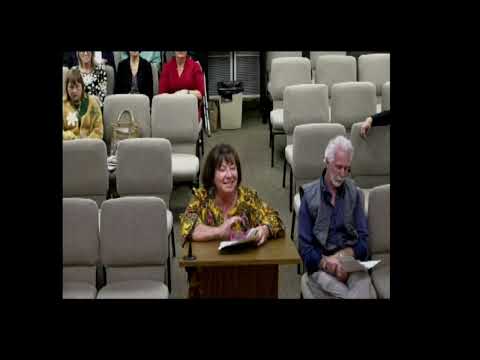
The agreement, discussed at length during the meeting, also brings two parcels near Yukon High School into the coverage of the deal. Amy McAllister, a Yukon resident from 14175 West Highway 66, said she worried the city was "selling ourselves short" by removing revenue-sharing and limiting future retail options: "It seems like we are a 100% focused on the data center concept because in the agreement, it clearly says we absolutely, under no circumstances, can have any type of retail over a 125,000 square feet," McAllister said.
Mayor (unnamed) and staff explained the restriction on retail power centers predates the current negotiations and was a condition when Yukon annexed the Frisco Road parcels around 2014. The mayor told the council the most significant change in this version of the agreement is the elimination of sales-tax sharing; he said Oklahoma City had insisted on the retail-power-center restriction when the parcels were first annexed and that the current agreement clarifies that term rather than banning all retail. "It's not cutting out retail entirely," the mayor said, "it clarifies things and eliminates that profit-sharing of any hotel, motel, or sales tax."
A staff reading of the finalized agreement defines retail shopping centers or retail power centers for this 2025 agreement as "large-scale retail developments exceeding 125,000 square feet of gross leasable area characterized by multiple anchor tenants such as national big-box retailers, warehouse clubs, home-improvement stores, or discount department stores, and supplemented by smaller retail or service tenants in adjoining inline or pad configurations." That definition was cited by council members and staff to explain which forms of retail would still be allowed.
Several council members and staff noted that while acreage comparisons can look unfavorable on paper, the parcels Yukon receives (including two parcels across from Covenant Community Church near Yukon Parkway) could affect retail patterns along the Yukon Parkway corridor. Staff also said that a proposed data center would not generate sales tax, so removing sales-tax-sharing has different implications depending on whether the land ultimately develops as a data center or as taxable retail.
Public commenters asked what would happen if the data center or its due diligence fell through; the mayor said the council could revisit the agreement in that circumstance. After discussion, the council called the roll and approved the interlocal agreement by unanimous vote.
Votes at a glance: the council voted "yes" in roll-call on the interlocal agreement (Wooten; Selby; Zimmerman; Hillmore). No dissenting votes were recorded at the Nov. 4 meeting.
The council did not adopt new zoning or other regulatory changes at the Nov. 4 meeting; it approved the interlocal agreement language and returned to regular business. Further property-specific development would be subject to future permitting and any other applicable approvals.