
Carson City sheriff details jail conditions, medical gaps and rehabilitation efforts in biennial report
Get AI-powered insights, summaries, and transcripts
Subscribe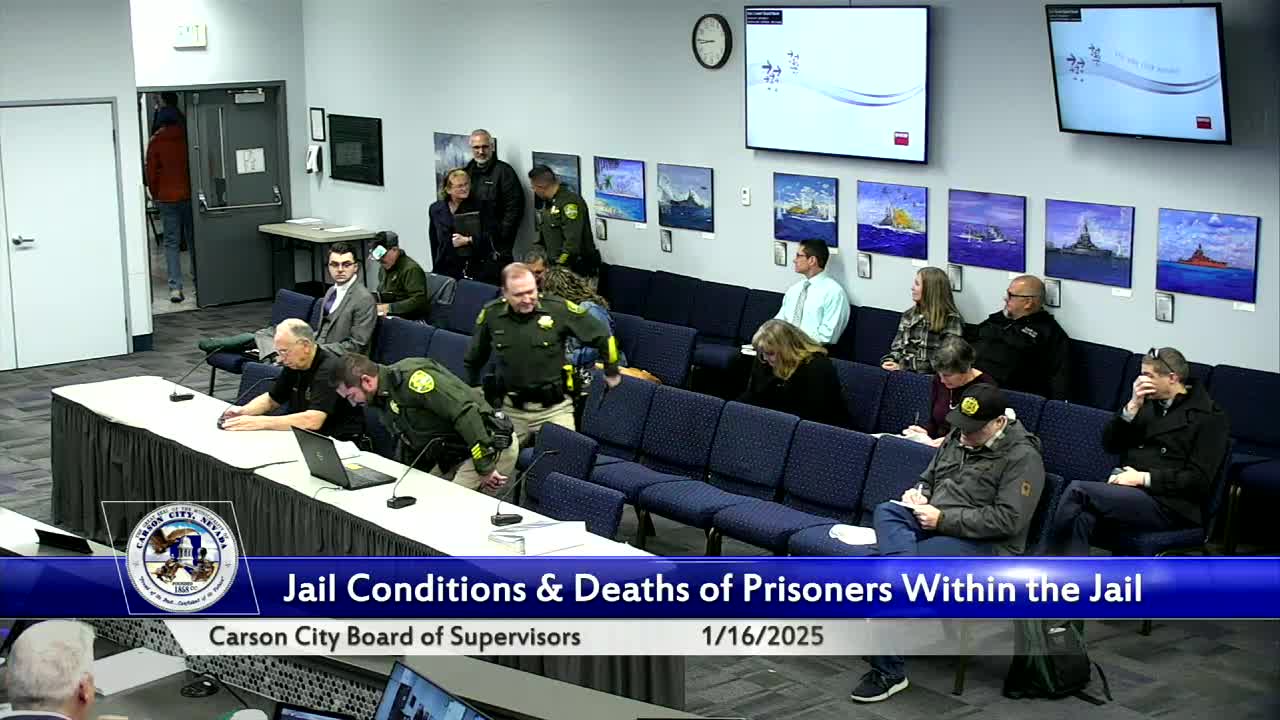
Summary
The Carson City Sheriff's Office presented its biennial Detention Center report to the Board of Supervisors, detailing facility maintenance, medical staffing and coverage shortfalls, one inmate death recorded in the review period, capital-improvement priorities and expanded family-services programming aimed at reducing recidivism.
The Carson City Sheriff's Office presented its biennial report on the Detention Center to the Board of Supervisors, detailing maintenance requests, medical staffing and coverage gaps, one inmate death, capital-improvement work and rehabilitative programming.
Lieutenant Matt Smith told the board that between January and November of the reporting year the jail logged roughly 288 building-maintenance service requests and that roughly six service requests remained outstanding. The facility's average monthly population is about 158 inmates, with an average length of stay of about 108 days; roughly 77% of that population is male and 23% female.
On medical staffing, the detention medical team currently includes a full-time advanced practice registered nurse (APRN) and a part-time registered nurse who covers about three days per week. The APRN works roughly 7 a.m. to 3 p.m. Monday through Friday. Lieutenant Smith said detention medical staff handle an average of about 370 medical visits per month and that the jail averages about six medical emergencies per month requiring Carson City Fire Department response and potential hospital transport.
Smith reviewed an inmate death that occurred July 15, 2014, saying deputies began life-saving measures including CPR and AED use; the inmate was transported to Carson City Hospital and later pronounced deceased. He said the coroner's report listed cardiac arrest and natural causes.
To address after-hours medical coverage gaps, Smith described options the office is exploring: hiring another full-time registered nurse, contracting with outside medical providers for extended coverage, or recruiting paramedics to assist with intake screening. He said after-hours medical emergencies currently rely on the fire department and that on-call duties place additional strain on the day-shift medical staff.
On facilities and capital improvements, Smith said refrigeration equipment in the jail kitchen is about 30 years old and has required repeated service; last year the jail spent about $5,491 for refrigerator service and more than $6,391 in the current fiscal year. He described a pending CIP request to replace refrigeration units to avoid recurring food loss (about $1,700 lost last year when refrigeration failed) and listed other completed projects including replacement of some ceiling tiles, dishwasher repairs, drywall and refurbishment of the padded cell. One outstanding CIP involves a new booking-counter protected glass to begin construction in March.
Smith also described inmate communication services and an imminent contract change: the current vendor, IC Solutions, has begun designating $0.35 of each call as a non-commissionable charge that the Sheriff's Office is being asked to pay. He said the office is researching alternative vendors as the contract nears expiration.
On programming, Smith highlighted the Family Services Unit, which provides weekly parenting classes, GED preparation and correctional education. The unit is exploring adding 10 tablets for educational use and a possible partnership with the University of Nevada, Reno, child outreach program to connect incarcerated parents with community services and reduce recidivism.
Board members asked about timing and distribution of medical requests and about contingency plans for refrigeration failure; staff said the jail uses a kiosk system for routine medical questions and that not all kiosk requests result in in-person assessments. On refrigeration failure, members urged staff to work with Public Health and local partners on contingency plans to transfer perishable food in outages. The board congratulated Lieutenant Smith on his promotion and thanked staff for the report.
The presentation was informational; no formal policy change or additional funding was approved during the meeting.