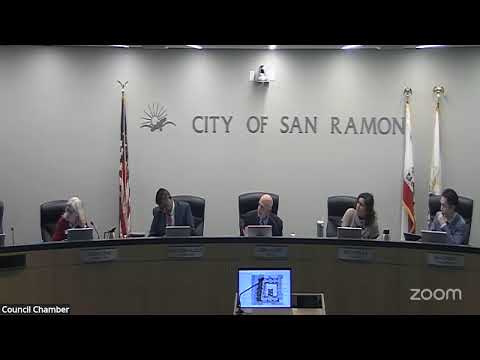
Study session held on 100-unit Orchards affordable apartments with on-site childcare; no action taken
Loading...
Summary
The San Ramon Planning Commission on Nov. 4 reviewed a study-session presentation for a proposed 100-unit affordable rental building at 6001 Bollinger within the Orchards master plan; no vote or entitlement decision was taken.
The San Ramon Planning Commission held a study session Nov. 4 for a proposed 100-unit affordable rental community at 6001 Bollinger as part of the 92-acre Orchards (Chevron Park) redevelopment. The presentation came from Sunset Development, Eden Housing and architect Steinberg Hart; no decision was required or made at the study session.
Annalisa, planning staff, opened the item and emphasized the session was informational: comments would be relayed to the applicant and were non-binding because the application is still under staff completeness review. Sunset Development representative Stephanie Hill and an architect from Steinberg Hart presented a site plan for a roughly 1.85-acre affordable site that would include 100 rental units (studios through three-bedroom layouts), one on-site manager unit, a central courtyard, community room, after-school space, a technology center and a dedicated childcare space sized to meet licensing for about 25 children.
Eden Housing’s development director, Dixie Bals, described financing and long-term restrictions. "Tax credits are in the form of equity provided by institutional investors in exchange for a credit over a 10 year period," Bals said, and added that equity from Low-Income Housing Tax Credits enables lower rents and affordability covenants for 55 years. Bals and the applicant said consolidating the affordable obligation in a nonprofit-owned development allows deeper affordability than would typically be feasible for a 15% inclusionary on-site requirement.
Presenters described site logistics and parking: the project as shown includes approximately 110 surface parking spaces (roughly a 1:1 ratio with units), 10 spaces referenced for childcare drop-off use, electric-vehicle and accessible stalls, and secure indoor bicycle storage adjacent to the building lobby. The team said the project would seek density-bonus concessions where state law allows; they also noted structured (podium) parking was studied but is substantially more expensive (presenters cited a rough estimate of about $125,000 per structured parking space), so the current design relies on surface and tucked-under parking to meet project needs.
Commissioners asked for additional pedestrian connections (particularly along the north side), clearer first-floor privacy/screening details, play equipment that serves a broader age range, shading for courtyard gathering areas, and safety measures for drop-off points near vehicle circulation. Staff and the applicant discussed timing: presenters estimated 9–12 months to demolish existing office buildings, 12–18 months to construct backbone infrastructure, and then a timeline that could put tax-credit application and potential construction starts several years out; presenters outlined a best-case estimate that doors might open around 2030–2031 depending on permitting, financing and construction sequencing.
Because the Orchards site is not listed as a housing opportunity site in the city’s housing element, staff noted the affordable units from this development would be counted as additional production in the city’s 2023–2031 RHNA cycle if the project is approved, increasing the city’s housing-buffer for the cycle.
The study session concluded with commissioners’ non-binding feedback; staff will continue plan review and return to the commission in a future hearing when the application is complete and entitlement actions are requested.