
Mayor’s 1 Philly SNAP support plan: $4M in city funds, rapid grants and targeted outreach launched
Get AI-powered insights, summaries, and transcripts
Subscribe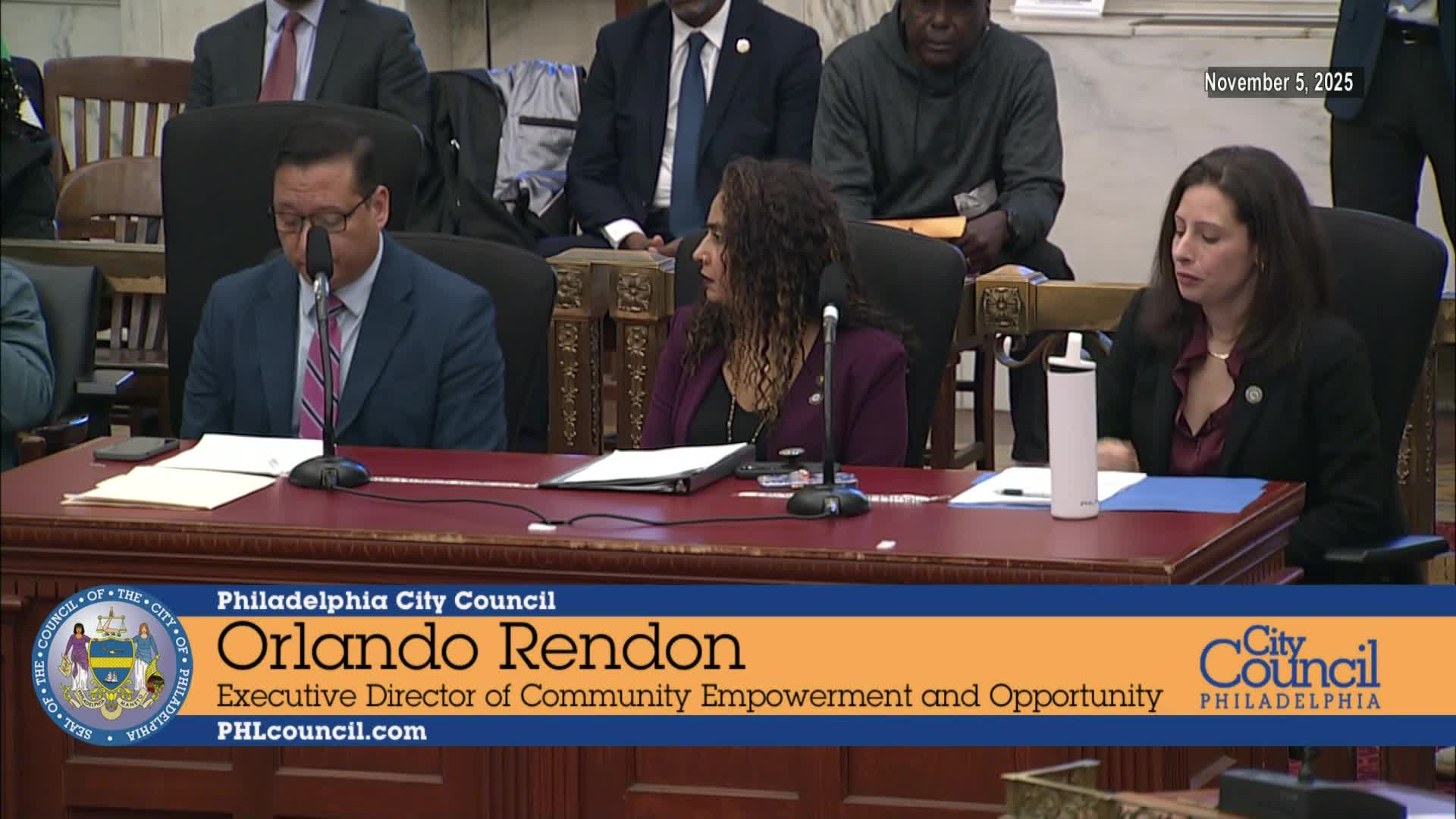
Summary
City officials told the Council committee they launched the 1 Philly SNAP support plan with $4 million in city allocations, simplified rapid grants, targeted outreach using PA DHS data and other emergency measures.
The Parker administration described an all‑hands response to the federal SNAP disruption at a Nov. 5 City Council hearing.
The administration’s emergency package, presented by Orlando Rendon of the Office of Community Empowerment and Opportunity, includes $4 million in city funds to support food distribution: $1 million each to Philadelphia’s two largest food bank partners and $2 million held as simplified grants for smaller, grassroots organizations. The Health Department is administering a simplified grant program that will distribute awards between $5,000 and $50,000; the first round application window closed shortly after the hearing and staff reported more than 1,100 grant applications in the first hours.
City officials said philanthropic partners committed an additional $6 million (managed by philanthropy) and the Commonwealth contributed $1 million for regional support. Finance staff said the philanthropy‑managed $6 million is separate from the city’s $4 million and that the city will work with philanthropic organizations to share distribution details with council.
Targeted outreach: City staff described a data‑driven outreach plan using a data‑sharing agreement with PA DHS that will allow the city to text and mail outreach to households that receive SNAP or TANF in Philadelphia and to coordinate with the School District and neighborhood community action centers to direct families to assistance resources. Staff said they planned to launch targeted text outreach within weeks and expand Benefili and NCAC help for one‑to‑one benefit navigation.
Other supports described in testimony: DHS reallocated $1 million for gift cards to families already engaged in DHS prevention and child‑welfare services; $1.5 million in emergency rental assistance was earmarked for furloughed federal workers; the Revenue Department announced temporary deferrals and fee waivers for water and taxes for impacted city residents; Commerce directed a $500,000 merchants fund for small food retailers and corner stores suffering revenue losses from the SNAP processing disruption.
Reporting and accountability: Officials said grant recipients will be required to report the amount and locations of food distributed and that the city will provide written follow‑ups to Council with the grant rubric, grantee list and reporting templates. Council members asked the administration to consider expanding the DHS gift‑card approach to broader populations as the fastest method of getting purchasing power into households while emergency operations scale up.
Takeaway: The city presented a multi‑pronged short‑term package that mixes direct food distribution, simplified grants to community providers and administrative relief. Council members pushed for faster, more direct cash or gift‑card distribution to households and asked for more written detail about philanthropic commitments and EBT timing.