
Council approves first reading on revised code-enforcement lien reductions; sets limits on magistrate reductions
Get AI-powered insights, summaries, and transcripts
Subscribe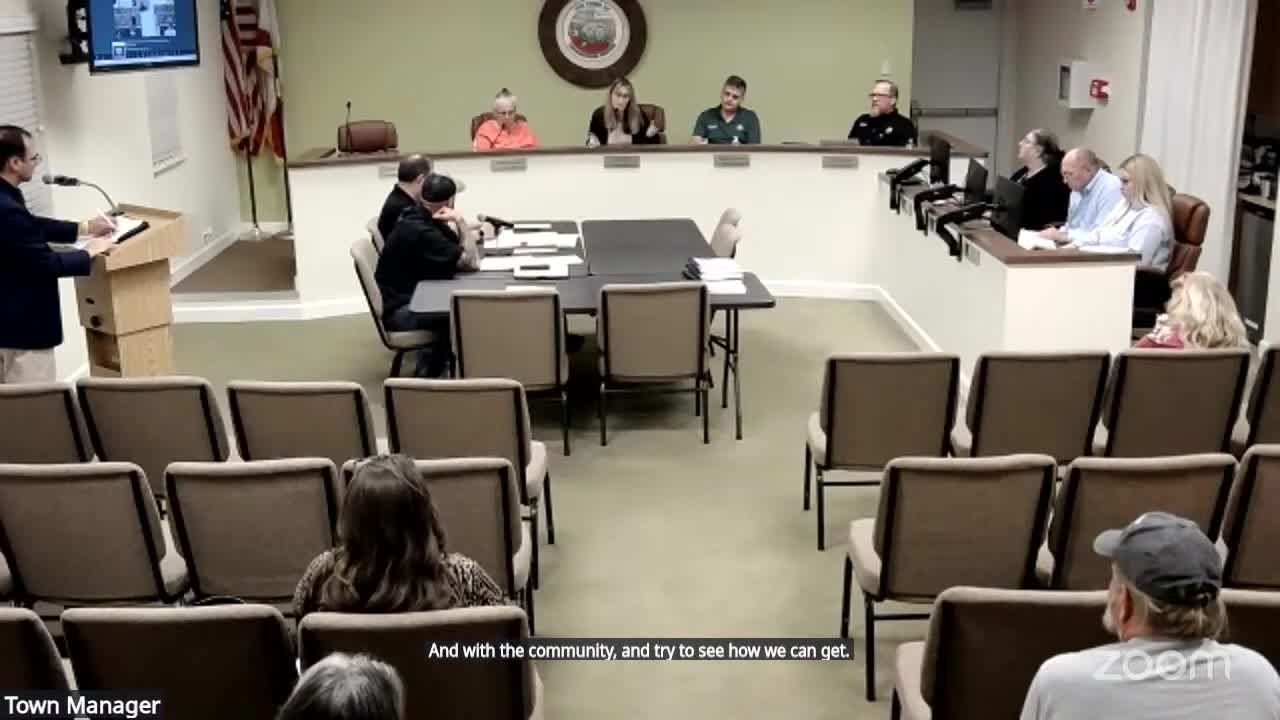
Summary
The council took first-reading action on an amended ordinance that narrows lien relief through the special magistrate, clarifies town-council review of life/health/safety liens and proposes a petition fee for council review; language was changed to have the town attorney confirm legal sufficiency for contracts and ordinances.
At the Nov. 4 meeting Town Attorney Kurtz reviewed a revised ordinance establishing procedures for code‑enforcement lien reductions and partial releases.
Key elements: the draft removes a general fine-reduction provision and focuses on lien reductions/releases; it limits special-magistrate authority so reductions cannot fall below 25% of the original lien (or $5,000, whichever is greater), and a partial release of lien (removing a lien from an otherwise-innocent parcel) is capped at 10% of the lien amount or $5,000, whichever is greater. The draft also requires that liens associated with underlying life/health/safety violations not be handled by a special magistrate but instead be subject to town-manager review and potential town-council action.
The draft includes a pathway for a property owner to petition the town council for further reduction but proposes a petition fee (the draft proposed $5,000) to bring a matter to council for consideration; the council would need an affirmative vote of at least four members (the ordinance sets that threshold in the draft).
Council action: after discussion the council voted to treat the advertised second-reading as a first reading to allow revisions and to advance the ordinance on first reading (vote 4–1). The council asked staff to finalize the text and return for second reading; town attorney Kurtz will revise wording where council asked for legal-sufficiency language and other clarifications.
Why it matters: the ordinance narrows the circumstances in which a lien can be reduced administratively, raises minimums for reductions and creates a council-level review pathway with constraints; proponents say the changes protect the public interest and discourage long delays in bringing properties into voluntary compliance; some council members and residents raised concerns about access and fees for those seeking relief.