
Residents, educators press Seguin ISD to preserve library access amid state law changes
Get AI-powered insights, summaries, and transcripts
Subscribe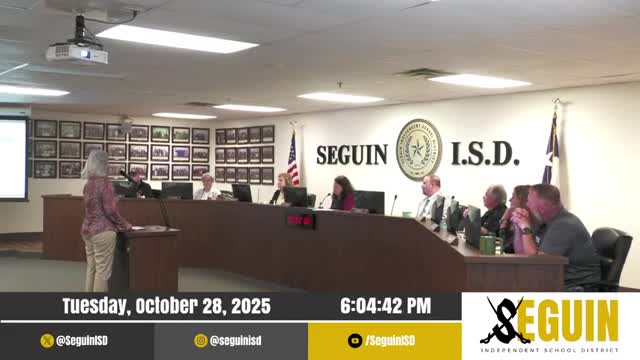
Summary
Dozens of residents and current and former Seguin Independent School District educators told the school board on Tuesday that libraries should offer diverse choices and that trained librarians are best placed to select age‑appropriate material.
Dozens of residents and current and former Seguin Independent School District educators told the school board on Tuesday that libraries should offer diverse choices and that trained librarians are best placed to select age‑appropriate material.
"Each student's story is different and we should validate and value all of their stories," said Kim Saunders, a Seguin High School teacher, during the meeting's audience period. "Choice in reading material is vital to the kind of deep growth and preparation for life that we want our students to experience."
Saunders was the first of 22 speakers the board called during a public comment segment that the district capped at two minutes per person. The speakers included retired school librarians, parents, a pastor and survivors of sexual assault; many described the books on recently challenged lists as educational or as resources that help students develop empathy. "Publish it. Share with the library. Share with your friends," said Anne Craig, urging the board to make any challenged‑title list public so people know which titles are affected rather than only knowing that books are being removed.
Some speakers urged limits on graphic descriptions for younger readers. "Graphic sexual violence is not a lesson. It's rather a very disgusting trigger," said Lynette Lennox, who told trustees she is an adult survivor and described how certain passages reopened trauma. "I'm not saying that we should erase every difficult topic ... There's a difference between addressing hard issues and exposing young readers to explicit trauma."
Multiple retired school librarians and teachers, including Connie Lippenholtz and Jamie Avon, described school librarians' training and asked trustees to rely on district policies that provide processes for parental opt‑outs and challenges. "Parents have always had the ability to say, 'I don't want my child to read these books,'" Avon said. "But they do not have the right to keep books away from other children."
What happened next: Under a separate action later in the meeting, the board voted to approve the district's proposed library purchase list after it had been posted online for the statutorily required public notice period. The motion to approve the list passed 6‑1; Trustee Lisa Burns cast the lone dissent. The administration had removed one accidentally included foreign‑language title before the meeting and fielded public testimony at Tuesday’s session. The board did not direct removal of additional titles during the meeting.
Why it matters: The discussion followed recent state legislation that changes how schools must handle acquisition and retention of certain materials. Speakers raised both first‑amendment and student‑wellness concerns, and several asked the district to balance compliance with state law and professional library selection standards. The board's approval of the purchase list does not on its face remove existing books from shelves, but it does set the district’s buying plan for new materials.
What trustees said: Board members discussed procedures and the new statutory posting requirements during the meeting. Trustees who supported the purchase list said the district followed the public‑notice process required by state law; trustees who opposed or expressed hesitation said they wanted additional review of specific titles. The roll call vote on the purchase list was 6 yes, 1 no.
What remains unresolved: Several public commenters asked for a publicly available, title‑by‑title record of challenged or removed materials; the board did not adopt a new public disclosure practice beyond statutory postings during the meeting. Administration said it will continue processing individual challenges and opt‑outs under the district’s established policies.
Attribution: Quotations in this article come from speakers who spoke during the public comment period and are recorded in the meeting transcript. Speakers referenced in the article include Kim Saunders (Seguin High School teacher), Anne Craig (resident), Lynette Lennox (resident, survivor), Connie Lippenholtz (retired school librarian) and Jamie Avon (retired Seguin ISD librarian).