Get Full Government Meeting Transcripts, Videos, & Alerts Forever!
Get email alerts on the Parks Recreation topic
No spam. Unsubscribe anytime.
San Marcos staff propose managed‑access test at Rio Vista; council OKs temporary fencing and asks for fee analysis
Summary
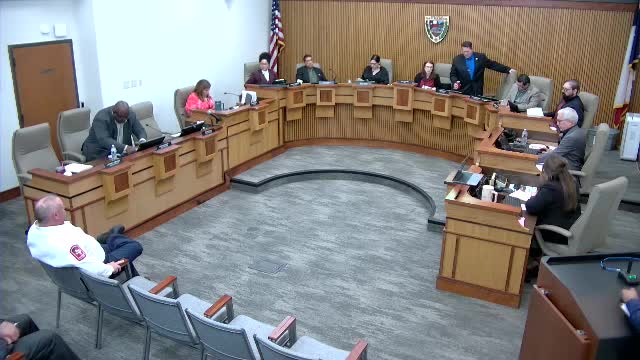
San Marcos staff recommended a temporary managed‑access pilot at Rio Vista this summer to reduce crowding and improve enforcement; council gave consensus to install temporary fencing as a test and asked staff to return with ordinance language and details on a potential out‑of‑town access fee.
San Marcos staff recommended a temporary managed‑access pilot at Rio Vista this summer to reduce crowding, traffic and safety problems and to improve compliance with the city’s single‑use beverage container ordinance. Council gave consensus to install temporary fencing and staffed access points as a test; staff will return with ordinance language and implementation details if council wants to adopt an access fee for out‑of‑town visitors.
Assistant City Manager Rodney Gonzales summarized the city’s summer‑season staffing and costs and recapped lessons from 2024, when the marshal’s office recorded more than 8,000 interactions with park patrons, 7,600 verbal education contacts, 329 ejections, two arrests and 69 medical incidents. Gonzales told council the city’s seasonal costs for managing the riverfront are about $728,000, comprised of an estimated $452,000 for the marshals office, $138,000 for park ambassadors, $118,000 for contracted litter removal (Easterseals) and $20,000 for habitat and in‑stream litter removal; closing Cheatham Street cost roughly $3,227 per day in 2024.
Staff proposed installing temporary, rented perimeter fencing at Rio Vista with managed access points staffed Fridays–Sundays during the summer season. Residents would receive a resident river pass and would not be charged; staff proposed an access fee for out‑of‑town visitors of $25 per group (up to 10 people) or $5 per individual age 6 and older. Gonzales emphasized the pilot is temporary and non‑permanent; the fence rental (bundled with portable‑restroom service) is quoted at about $30,000 for the summer. Gonzales said the fence can be installed quickly so patrons become accustomed to entering at staffed access points; any access fee would require a separate ordinance and a later effective date (staff proposed July 1 as a possible date if an ordinance is approved).
Interim City Marshal Tiffany Williams and staff described significant personnel changes in the marshals office since last season, noting the office went from nine full‑time deputy marshals to two, and said leadership and culture changes have driven turnover. Williams said the city is implementing recommendations from a staffing study to increase efficiencies and rebuild the office’s operational structure.
Council members raised questions about how the access pilot would be staffed and communicated, how residents would obtain and show proof of residency for a resident pass, and whether the presence of a fee would reduce unwanted behavior. Council also debated whether to allow parking‑enforcement technicians to initiate tows under limited circumstances to reduce response delays. During the roll‑call style check of consensus, council recorded 6 members in favor of installing temporary managed‑access fencing this summer, 5 members in favor of continuing discussion on an out‑of‑town access fee, and 3 members who supported modifying the parking‑enforcement ordinance to allow technicians to initiate towing in limited circumstances.
Staff also provided a paid‑parking update for City Park: resident registration and education begins June 1 and paid parking is scheduled to begin July 1; staff listed several in‑person registration events in June and said enforcement would rely on license‑plate cameras and cashless kiosks. Staff will return with ordinance language, required details on resident registration, and implementation dates; in the near term staff will proceed with managed‑access preparations including fencing and signage if council confirms consensus.
If council elects to pursue an access fee, staff will return with an ordinance and implementation plan; the managed‑access pilot can proceed without an immediate fee as a way to test whether the fencing and staffing reduce crowding and improve compliance.