Get Full Government Meeting Transcripts, Videos, & Alerts Forever!
Get email alerts on the Land Use topic
No spam. Unsubscribe anytime.
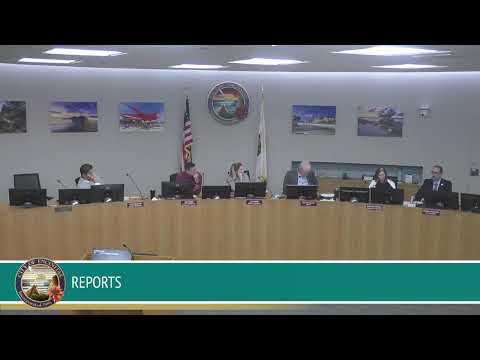
Encinitas council affirms Planning Commission approval of Bella Vista subdivision after hearing appeal
Summary
The Encinitas City Council voted unanimously to deny an appeal of the Bella Vista subdivision, affirming planning approvals for a 17‑lot tentative map and associated permits after an extended public hearing.
The Encinitas City Council voted to deny an appeal of the Bella Vista subdivision approval, affirming the Planning Commission's unanimous decision to allow the creation of 17 lots with associated entitlements.
Opponents from neighborhood groups argued the Mitigated Negative Declaration (MND) did not adequately analyze environmental impacts, said the process amounted to unlawful "piecemealing" under CEQA, and challenged the project's density bonus calculation, asserting the city should use slope‑adjusted or net acreage rather than gross acreage. Speakers pressed on topography, hydrology, and potential habitat impacts on the eastern slope.
Staff and the project applicant responded that the final MND analyzed construction and operational impacts for the full project and included enforceable mitigation measures. Planning staff said the MND incorporates the likely environmental effects of building 17 residences and that technical appendices were included with the environmental document. City staff and the applicant also noted that the state Department of Housing and Community Development (HCD) expects density bonus yield to be calculated against maximum allowable gross residential density; the city's prior ordinance change to net density had been rescinded after HCD guidance.
Project representatives said the proposed lots are compatible in lot size with the surrounding neighborhood, that the development footprint is contained to historically disturbed and maintained farmed areas, and that the application preserves sensitive habitat in a permanent open‑space easement. During the hearing the applicant described recent private, third‑party agreements reached with some adjacent property owners to limit future uses (including deed restrictions to prohibit SB 9 lot splits for some lots) and to lower certain pad heights and increase setbacks; the applicant said those agreements are private, must be implemented through substantial conformance or design review, and cannot be imposed as city conditions of approval.
After public testimony from dozens of neighbors, experts and applicant representatives, council members discussed CEQA thresholds, the adequacy of the biological analyses, the fire protection plan and hydrology studies. The city attorney advised that state law and local procedures limit the council's options and that the Subdivision Map Act sets a 45‑day hearing window for completed appeals unless the applicant voluntarily agrees to an extension. The council found that the record contained sufficient evidence supporting the Planning Commission's findings and voted to deny the appeal and affirm the Planning Commission approvals. The motion carried unanimously.
Next steps: the subdivision approvals (tentative map, density bonus findings, design review and coastal permits) retain the mitigation measures and conditions set by the Planning Commission; future building permits or design review for the individual homes will be subject to the mitigation, monitoring and reporting program in the MND and to any conditions set during subsequent discretionary reviews.
Key people: Scott Maloney, representing nearby homeowners and part of the appellant group, laid out the neighborhood's objections; Erin McKinley represented the applicant and summarized the project's changes and private agreements; Anna Kolamoussi and other planning staff summarized the City's environmental and technical review.