Get Full Government Meeting Transcripts, Videos, & Alerts Forever!
Get email alerts on the Transportation Bike Network topic
No spam. Unsubscribe anytime.
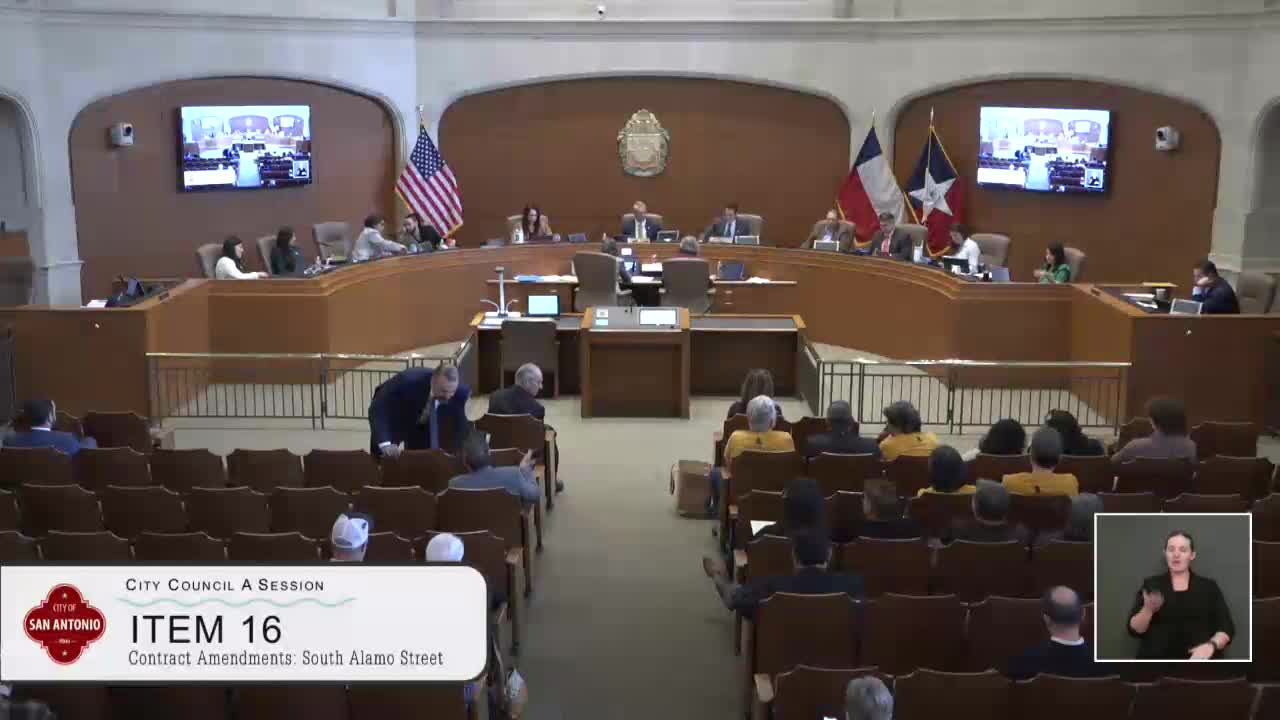
San Antonio adopts updated Bike Network Plan, requires creation of bike/mobility advisory commission
Summary
The City Council approved a 1,500+ mile Bike Network Plan that prioritizes protected lanes, safer crossings, and a phased implementation strategy; council also amended the plan to require formation of a bike/mobility advisory commission to oversee implementation and community engagement. The vote passed with 10 in favor and 1 abstention.
The San Antonio City Council on Jan. 30 adopted an updated Bike Network Plan (BNP), an overhaul of the city's 2011 bike master plan that maps more than 1,500 miles of proposed bicycle facilities and guidance for design, prioritization and funding.
The plan, presented by Kat Hernandez, director of Transportation, outlines a three-tier network (primary, neighborhood and visionary routes), recommends facility types (protected bike lanes, buffered lanes, shared-use paths, and bike boulevards), and sets performance measures and funding approaches to guide deployment over the next two decades. Hernandez said the plan pairs infrastructure recommendations with policy changes such as protected intersection treatments, floating bus stops and ADA-compliant access at bike lanes.
Why it matters: Council members and community advocates said the plan is intended to reduce cyclist and pedestrian fatalities, improve last-mile connections to transit and serve residents—about 8% of households citywide—who lack access to a private vehicle. Brian Martin of Bike San Antonio and representatives of local groups including Black Girls Do Bike and Activate SA urged the council to prioritize protected lanes and faster implementation so the city can lower traffic deaths and expand equitable access.
Council discussion and amendment: The meeting included sustained public comment from neighborhood advocates, disability and aging organizations and transit and bike-share operators. After debate the council approved an amendment that changes the plan's language from “explore forming” to require creation of a city advisory commission to help oversee implementation, ensure community engagement and publish annual reports. Council Member Will Palaios moved the amendment; it was seconded and adopted before the main vote.
Vote and next steps: The ordinance to adopt the Bike Network Plan passed by a voice vote with 10 ayes and one abstention (Council Member White). Transportation staff said adoption provides an implementation roadmap; each proposed project still requires community engagement, design and funding approvals. Staff estimated the plan’s full rollout could require between $540 million and $1.4 billion over many years, contingent on state and federal grants and local allocations. The amendment requires council to establish the advisory commission and directs staff to return with an implementation schedule and performance metrics.
Council and advocates emphasized implementation priorities: lighting for trails, regular bike-lane maintenance (debris removal), enforcement of no‑parking-in‑bike‑lanes, and quick-build demonstration projects to test designs. B‑Cycle, the city's bike-share operator, said a connected protected network would increase ridership and improve financial sustainability for shared-bike services.
Quotes: Bike San Antonio spokesman Brian Martin said, “Bike San Antonio does support this bike network plan and we are really excited about seeing it implemented.” Council Member Palaios said the commission motion was intended to “breathe life into this plan” and guard against the plan becoming a document that collects dust.
Implementation and funding: The plan identifies immediate (tier‑1) projects for quick deployment and larger tiered projects requiring more funding. Staff said projects will be advanced through municipal programs, development processes, annual street maintenance budgets, bonds and state/federal grants. Each project will require individual public engagement and design review before construction.
Ending: Adoption establishes a 25‑year strategic framework for a more connected, multimodal San Antonio and directs staff to return with the advisory commission structure, a funding strategy and an initial list of tier-1 projects for near‑term implementation.