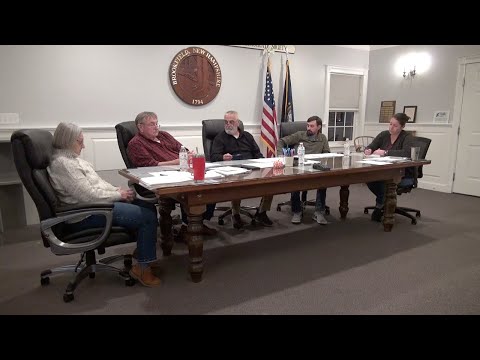
Brookfield Select Board discusses new state land‑use laws and options for local response
Loading...
Summary
Select Board members debated six state land‑use laws passed this year, expressing concern about perceived loss of local control and discussing strategies — including informational warrant language, legal review and coordinated advocacy — for responding ahead of ordinance changes required by state statute.
Members of the Brookfield Select Board spent a substantial portion of the Nov. 4 meeting discussing recent state legislation that affects municipal land‑use regulation. Board members said they are aware of six specific laws passed this year that require changes to local ordinances and planning processes and expressed concern that some measures reduce local authority.
The board discussed options for responding to state mandates, including asking town counsel and regional planning commissions for recommended language, preparing warrant language that clearly explains changes are to comply with state law, and coordinating public input to legislators (written comments or remote testimony) rather than expecting in‑person attendance in Concord.
Several speakers noted New Hampshire’s reliance on RSAs and the doctrine commonly referenced as Dillon’s rule, which, they said, limits municipal autonomy where state law prescribes standards. Board members and an attendee who had attended a recent New Hampshire Association of Conservation Commissions conference described the legislative process and urged residents to submit focused input to state legislators when bills are in committee.
The board asked staff to collect the six laws’ summaries (NHMA and SRPC had synopses), have counsel (Laura) and regional planners review them, and prepare recommended warrant language for the town’s planning board to consider. Board members emphasized being explicit in warrant wording to avoid confusing voters about whether a town vote is ratification of state law or a discretionary local policy change.