Get Full Government Meeting Transcripts, Videos, & Alerts Forever!
Get email alerts on the Parks And Recreation topic
No spam. Unsubscribe anytime.
Adrian officials order exploratory digging after Bone Pool leak; full overhaul could cost $2.5–$3 million
Summary
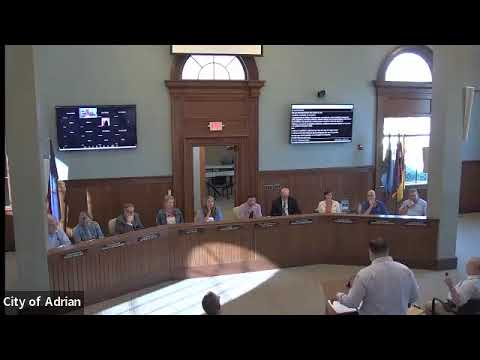
Parks & Recreation Director Jeremiah Davies told the Adrian City Commission on Sept. 2 that an underground leak has been forcing unusually high historical water usage at Bone Pool and is likely tied to aging plumbing under the pool.
Parks & Recreation Director Jeremiah Davies told the Adrian City Commission on Sept. 2 that an underground leak has been forcing unusually high historical water usage at Bone Pool and is likely tied to aging plumbing under the pool. He asked the commission to allow in‑house exploratory digging, saying utilities and public works could begin work the week of Sept. 9 and that he would report results at the next meeting.
Davies reviewed the pool’s history and previous planning: a 2023 study proposed a new facility that was not approved, after which commissioners directed staff to pursue a phased restoration. Phase 1 (mechanical repairs) was completed in 2024; Phase 2 has focused on building infrastructure (roof, ADA, plumbing and electrical); Phase 3 would be a full gut and rebuild of the pool footprint. Davies said the pool piping dates to 1971–72 and the liner is well past its life expectancy, describing walls and interior concrete “starting to cave in.” Staff’s current estimate for a full overhaul was roughly $2.5 million to $3 million.
Davies said staff and contractors ran cameras and tests but could not immediately locate the leak. On Aug. 15 the pool manager reported water erupting through concrete joints near the slide; that area, along with other signs of saturation around the liner, led staff to conclude a leak runs under or alongside the pool. Davies described a best‑case scenario in which crews dig along a parallel pipe, find and patch a leak, replace torn concrete and put in a new liner, which could allow the pool to reopen next season. He said one liner cost estimate given in the meeting was about $300,000.
Commissioners pressed staff on costs and long‑term use. Davies said the department’s operating figures show the pool ran at roughly a $70,000 annual deficit this year after revenue and expenses. He also said Phase 2 work (the building roof and infrastructure) is already underway and intended in part to preserve the facility or allow repurposing of the building if the commission later decides not to keep the pool. Davies noted that specialty pool contractors in the region are booked about two to three years out, which could delay a full rebuild.
Davies requested permission to proceed with exploratory digging using in‑house crews and city equipment (Vactor trucks, cemetery/backhoe crews). Commissioners expressed support for beginning targeted in‑house digging and asked staff to return to the commission at the next meeting with results; Davies said he could start Sept. 9 and expected to report promptly. The commission did not take a formal roll‑call motion to authorize exploratory digging; staff indicated no external bid would be required for the initial investigative work.
Commission discussion ranged from looking for private fundraising or grant opportunities to the possibility of converting the site to other amenities (smaller lap pool, splash pad, alternate recreational uses) if the full rebuild is judged unaffordable. Several commissioners urged staff to engage the public and prepare cost and usage comparisons before committing to a multi‑million dollar rebuild.
Jeremiah Davies said staff will present operating and project figures at an upcoming meeting and that exploratory work will determine whether the pool can be patched for short‑term use or requires a full Phase 3 replacement.