
South Burlington adopts FY26 work plans; council directs staff to study building electrification rules
Get AI-powered insights, summaries, and transcripts
Sign Up Free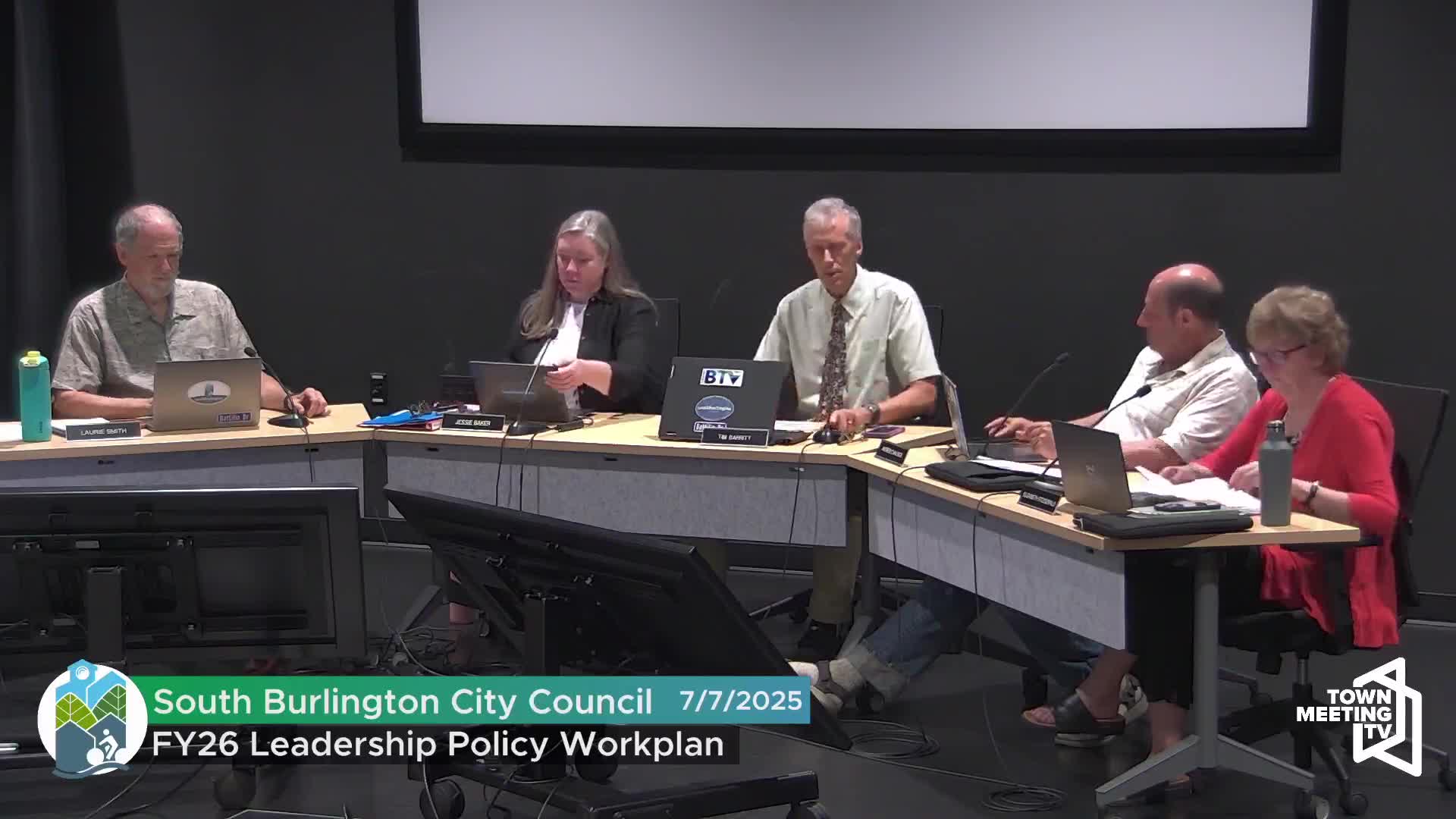
Summary
Councilors adopted FY26 policy priorities and committee work plans on July 7. During discussion members requested staff gather data and builders' feedback on whether the city's renewable-primary-heating rules and building standards should be tightened to align with the climate action plan.
City Manager Jesse Baker presented the leadership-team and committee FY26 policy priorities and work plans and the council adopted them after minor edits and instructions. Staff had earlier captured committee input and added items including cemetery management, a public tree plan and climate-related inspection work.
The most substantive discussion centered on aligning building-code and municipal regulations with the city's climate action plan. Several councilors asked for a structured study of the existing renewable-primary-heating ordinance and related building requirements to determine whether the city can or should tighten rules to move toward all-electric new construction or stronger electrification standards. Councilors noted practical considerations: existing contractor practices, supply-chain and installer familiarity with all-electric systems, and whether requiring higher electric shares (for example 85% or 100% electric) would change construction cost or create unintended consequences.
By motion, the council adopted the FY26 work plans and appended direction: staff should gather builder feedback and data on why developers add fossil-fuel backup systems and report recommended options for council consideration. The council also asked staff to consider long-term homeowner operating costs (including the social cost of carbon) when assessing housing-climate trade-offs.
What happens next: Staff will return with analysis and recommended options; the work plan will be tracked across the fiscal year and reported back periodically.
Speakers and staff who presented or commented on the item are listed in the roster below.